
The global hydrogen industry is entering a phase of structural reshaping, with cost competitiveness and sustainability emerging as the defining priorities. According to energy research firm Wood Mackenzie, 2026 is expected to mark a pivotal turning point, as the sector transitions from a policy-vision-driven stage to one powered jointly by policy support and market momentum.
In China, this shift is already taking shape. By the end of 2025, the country’s installed capacity for renewable-powered hydrogen production projects exceeded 250,000 tonnes per year, representing a year-on-year doubling of capacity.
Beyond Demonstration: When the Hydrogen Industry Enters the Mass-Production Test
As deployment scales from pilot demonstrations toward hundreds-of-thousands-tonne and eventually million-tonne applications, the factors shaping industry competitiveness are rapidly evolving. The decisive question is no longer who can demonstrate feasibility—but who can first solve the challenges of manufacturing efficiency and production consistency at scale.
In this context, a new industry race is underway—one centred on production efficiency.
Several international financial and energy research institutions also note that the hydrogen sector remains in a phase of rapid technological evolution. A defining challenge at this stage is clear: production equipment must be forward-looking in capability, while also robust enough to support stable large-scale manufacturing deployment.
This places unprecedented requirements on equipment performance across multiple dimensions, including: precision, production rate, flexible adaptability, operational reliability. Together, these factors are becoming decisive benchmarks for next-generation hydrogen manufacturing platforms.
As the core component of a fuel cell system, stack manufacturing precision directly determines system-level performance, durability and consistency.
As stack layer counts continue to increase, even minor positioning deviations can accumulate during the stacking process, eventually leading to: alignment errors , sealing failure and performance degradation.
At the same time, industry expectations for production rate continue to rise. Pursuing speed alone or precision alone is no longer sufficient for true mass production readiness. Instead, achieving high precision and high throughput simultaneously has become the central technical challenge in next-generation fuel-cell stack manufacturing.
Precision in an Instant
Defining a New Benchmark for Intelligent Stack Manufacturing
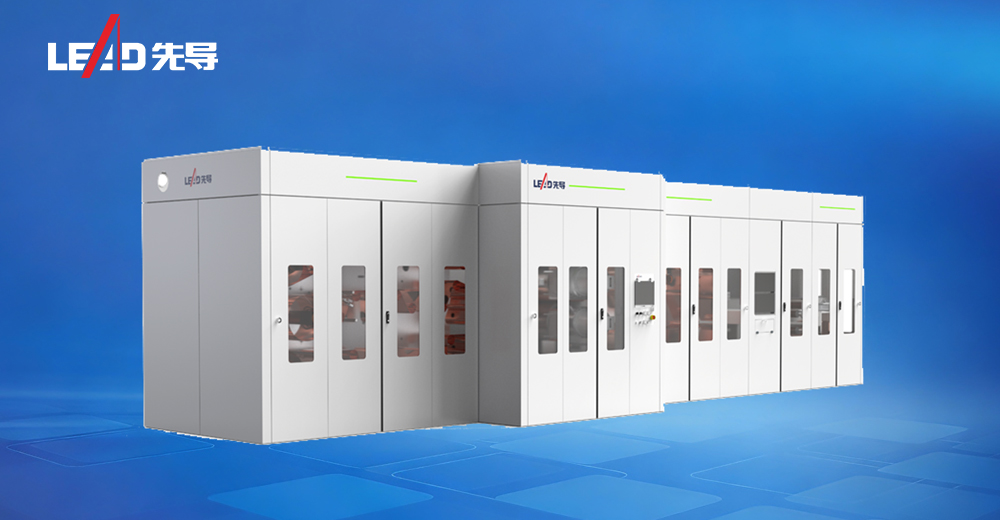
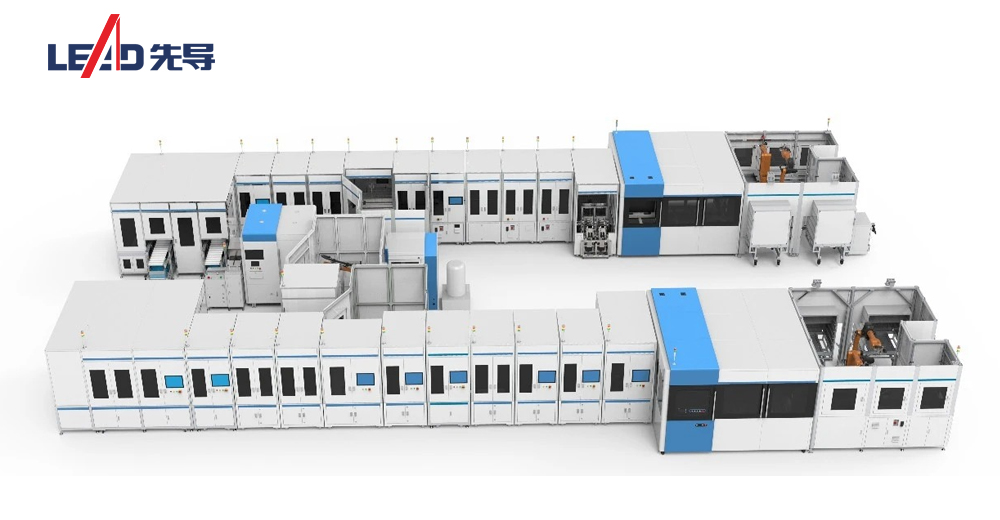
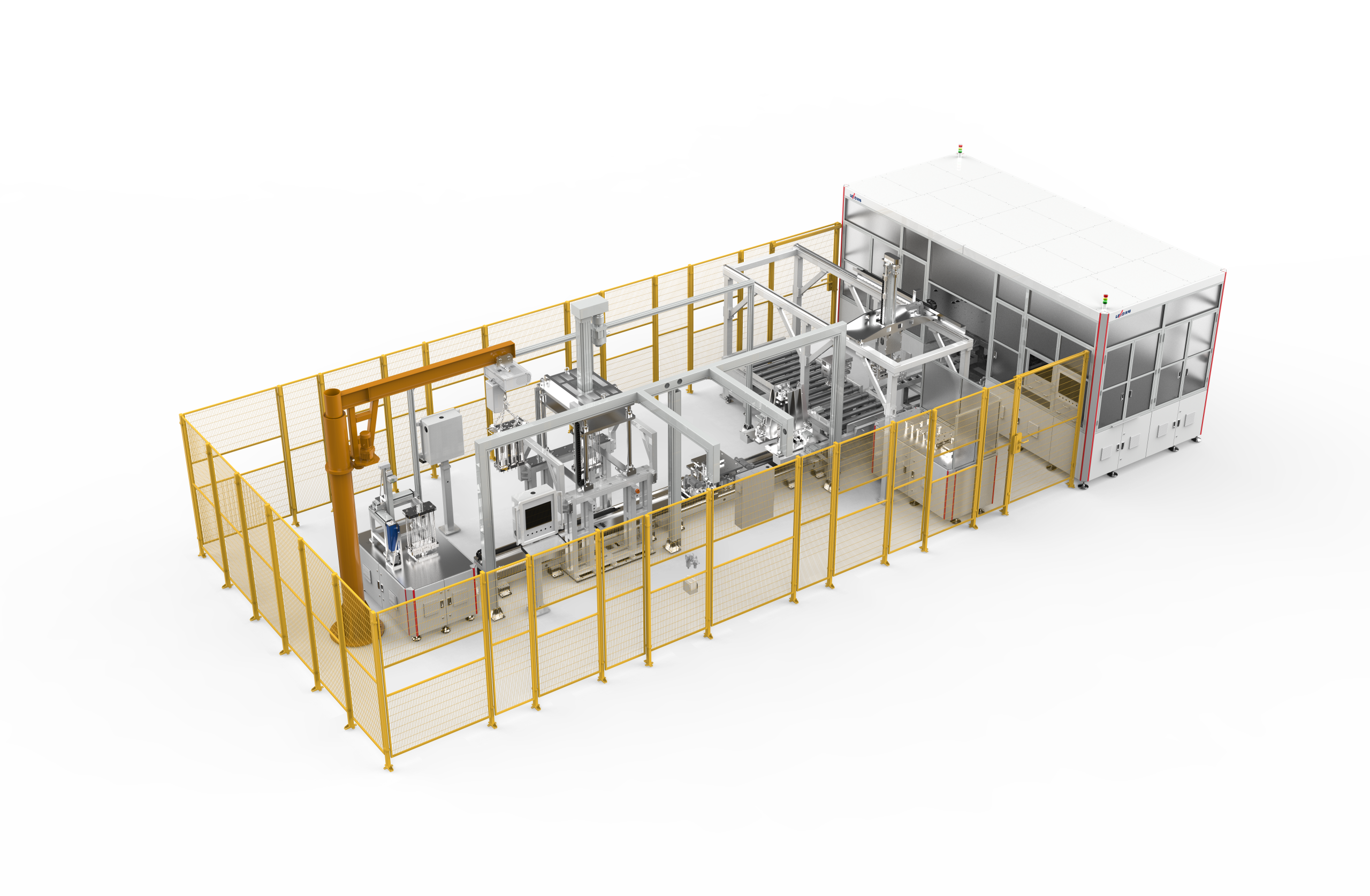
Addressing the core bottlenecks of hydrogen mass production, Lead Hydrogen Intelligent(LHI)’s modular fuel cell stack assembly machine has been engineered from both a systems-level perspective and a long-term mass-production deployment framework, establishing five core advantages that form a robust manufacturing foundation for customers scaling toward industrialisation:
Redefining Standards for Mass Production Leadership
Breaking through the long-standing industry trade-off between precision and throughput, the system achieves ±0.1 mm positioning accuracy together with 1 second per piece takt time within the same equipment footprint (single stacking workstation). This enables customers to secure early advantages in cost control and large-scale deployment readiness.
Closed-Loop Quality Control for Stable Manufacturing
An integrated intelligent sensing architecture and real-time closed-loop control system enable millisecond-level monitoring and automatic deviation correction, preventing cumulative positioning errors at the source and ensuring: consistent stack quality, stable sealing performance, and reliable system-level output consistency.
Flexible Changeover for Faster Market Response
The platform supports one-click switching between multiple product configurations, significantly reducing changeover downtime and enabling production lines to keep pace with rapid technology evolution and shifting market requirements.
Non-Contact Precision Handling for Process Stability
Equipped with LHI’s proprietary composite vacuum suction system, the equipment enables high-precision, non-damaging material handling, ensuring stable adsorption performance and process reliability throughout the stacking workflow.
Modular Architecture Designed for Future Expansion
Built on a Lego-style modular platform architecture, the system allows simplified maintenance while supporting flexible capacity expansion and future technology upgrades. Customers can scale production progressively alongside business growth, significantly reducing total lifecycle equipment costs.
LHI’s stacking equipment has already achieved large-scale commercial deployment, supporting dozens of leading enterprises across the hydrogen industry value chain and covering application scenarios ranging from pilot-line validation to full-scale mass production environments.
Across all delivered projects, the systems have earned strong market recognition for their operational stability, high yield performance and broad process adaptability.
In particular, a third-generation modular fuel cell stack production line customised for a leading industry customer has now operated continuously for several thousand hours, achieving yield rates exceeding 99%, with both stability and throughput performance receiving strong customer validation.
The large-scale deployment of hydrogen energy ultimately depends on advances in precision manufacturing capability and production efficiency. LHI continues to focus on solving the sector’s most critical engineering challenges, translating deep technical expertise into reliable mass-production tools.
Looking ahead, the company will remain closely aligned with evolving market needs, supporting industry partners in overcoming scale-up barriers and accelerating the transition toward the clean energy era.