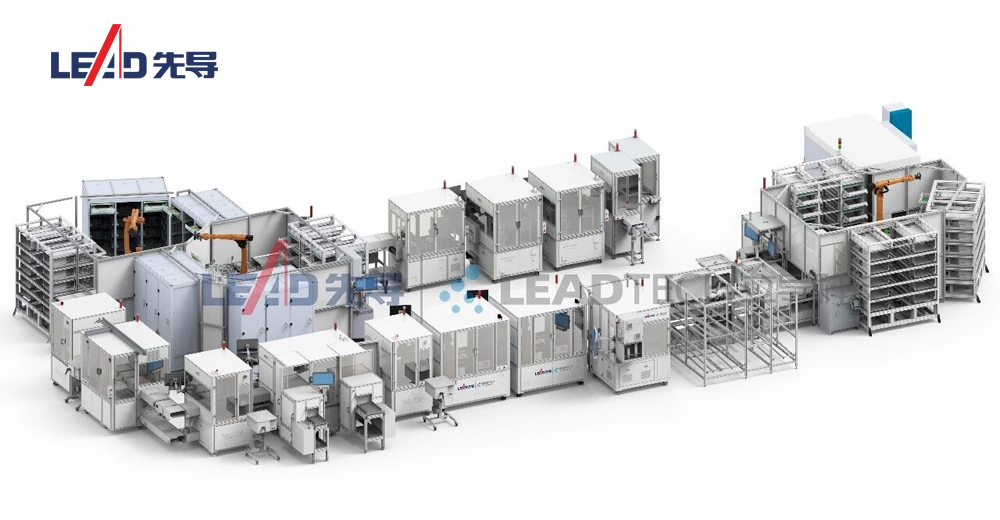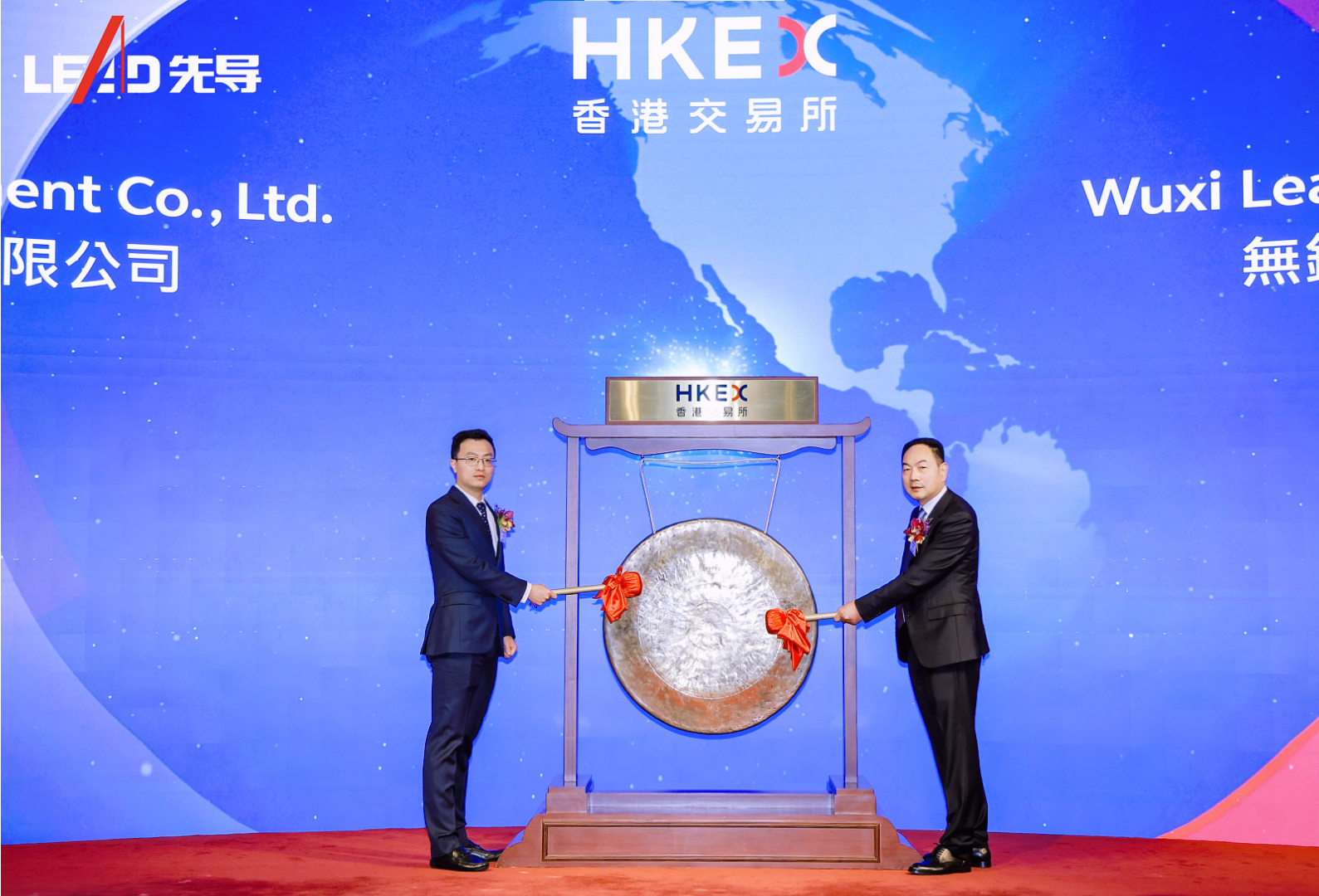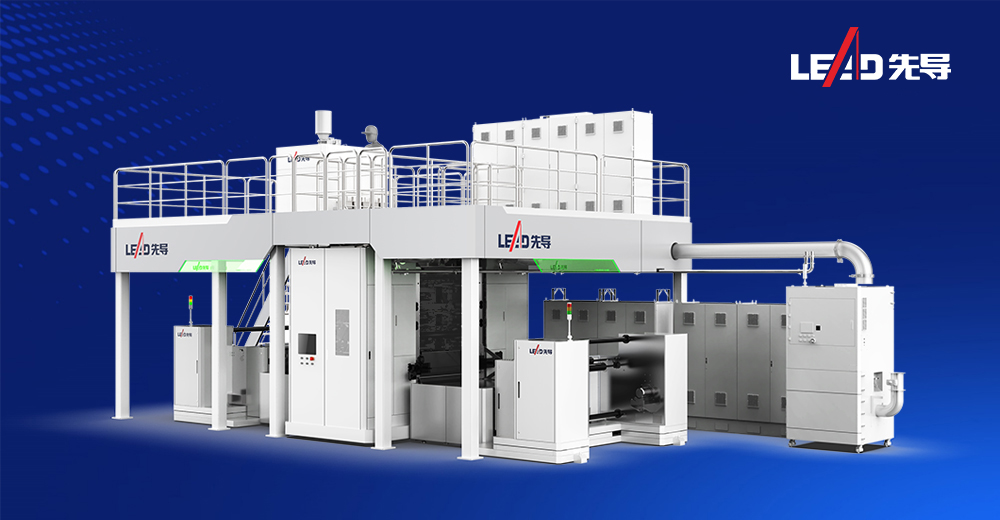

As the lithium–ion battery industry accelerates into the TWh era, surging market demand is placing unprecedented pressure on manufacturing systems. Traditional automation models are approaching their limits, increasingly unable to support the simultaneous requirements of high quality and large-scale production.
From Data Silos to Intelligent Productivity
Breaking Through the Pressures of the TWh Era
In the TWh era, delivery capability has become the ultimate benchmark of manufacturing resilience. Bottlenecks in resource efficiency and the risks of quality instability are reshaping the competitive logic of the industry.
Rather than relying on fragmented AI applications to address isolated equipment issues, Lead Intelligent Equipment (hereafter referred to as LEAD) has taken a broader approach—developing an AI-driven intelligent manufacturing platform tailored specifically for the lithium–ion battery industry. The goal is to deeply integrate information technology with manufacturing processes and overcome long-standing systemic challenges in industrial AI software, including isolated applications, lack of reusability, and the absence of closed-loop systems.
Against this backdrop, LEAD has connected previously isolated data sources across lithium–ion battery production lines—including equipment operation data, process parameters, fault alarms, maintenance records, and quality inspection results. By integrating AI algorithms, industrial knowledge graphs, equipment SOPs, historical maintenance cases, process databases, and real-time monitoring data, the company has transformed years of accumulated unstructured industrial data into reusable and continuously evolving AI knowledge assets.Against this backdrop, LEAD has connected previously isolated data sources across lithium battery production lines—including equipment operation data, process parameters, fault alarms, maintenance records, and quality inspection results. By integrating AI algorithms, industrial knowledge graphs, equipment SOPs, historical maintenance cases, process databases, and real-time monitoring data, the company has transformed years of accumulated unstructured industrial data into reusable and continuously evolving AI knowledge assets.
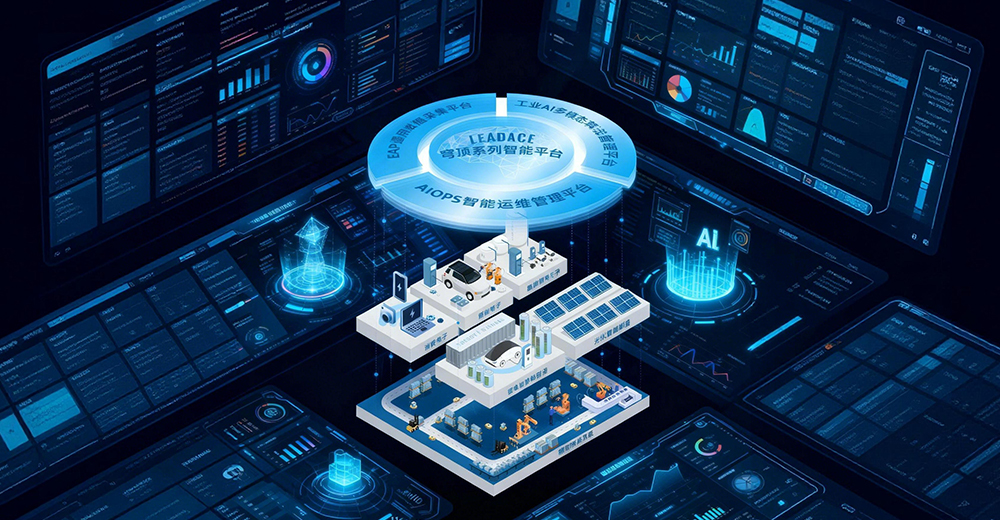
The result is the LEADACE Dome Series Intelligent Platform, which marks a key transition in lithium–ion battery manufacturing—from simple data recording to true intelligent productivity—and signals the arrival of “extreme intelligent manufacturing” in the TWh era.
From Data Entry to Intelligent Decision-Making
A Three-Tier Platform Architecture
For AI-driven smart manufacturing, the platform serves as the central engine of productivity, integrating industrial experience, data intelligence, and software execution capabilities. It is also the core competitive foundation enabling manufacturers to master extreme intelligent manufacturing.
To ensure stable development and sustainable operation of the LEADACE Dome Series Intelligent Platform, LEAD has built a three-layer architecture, spanning from data acquisition to scenario-based applications.
Foundation Layer: Data Acquisition Platform – The Entry Point of Production Data
Serving as the “neural endpoint” for equipment data collection, the EAP universal data acquisition platform supports most industrial protocols used by PLCs and sensors on the market, enabling seamless deployment at the equipment level.
With built-in edge computing capabilities, the platform performs data cleaning, filtering, and preliminary analysis directly at the source of data collection. This provides high-quality data inputs for upper-layer systems while significantly improving data utilization efficiency.
Middle Layer: Development Platform – Balancing Efficiency and Flexibility
LEAD’s middle-layer platform functions as a multi-modal industrial AI algorithm management system, currently comprising two core components:
- Industrial Big Data and Cloud-Based AI Algorithm Platform (AI Mega Platform)
This platform acts as the primary user of bottom-layer data, focusing on the training of AI algorithms and image recognition models and enabling rapid iteration of AI deployments for customers.
- Industrial Application Secondary Development Platform (VIEW Industrial Platform)
Designed to respond quickly to customer requirements, the VIEW platform provides low-code, modular AI components, allowing users to build customized industrial systems as easily as assembling building blocks.
Application Layer: Business Platform – The Intelligent Brain of Production
At the top layer sits the AIOps Intelligent Operations and Maintenance Management Platform, which consolidates operational data across the entire factory and focuses on solving real-world production challenges.
The platform aggregates and manages equipment operational data across all facilities, while also supporting virtual simulation and real-time monitoring of production lines. Through automated analysis, it can identify the specific process stages responsible for product defects (NG) or equipment failures, and determine the root causes behind these issues.
From Algorithmic Closed Loops to Production Line Transformation
Intelligent Manufacturing Unlocks New Quality Productive Forces
By building the LEADACE Dome Series Intelligent Platform, LEAD has transformed the theoretical productivity of AI—automatic problem detection, automated optimization decisions, and autonomous execution control—into practical capabilities that can be deployed directly in real-world manufacturing environments.
The algorithms developed on the MATRIX platform are widely applied in materials and equipment R&D, manufacturing technology upgrades, and process optimization, enabling customers to accelerate research cycles, improve equipment stability, and increase production line efficiency.
The PAI platform, meanwhile, focuses on advanced inspection technologies tailored for complex manufacturing scenarios, including large structural components, miniature precision parts, and enclosed cavity structures. It integrates 3D vision measurement, AI-driven defect detection, and industrial CT imaging technologies.
These capabilities allow the system to intercept critical defects—such as microscopic tab folding during high-speed production—and precisely detect internal flaws within battery cells. For customers, this translates into a 50% improvement in inspection capability, a 20% increase in efficiency, and a 30% reduction in costs.
The AIOps platform has already integrated multiple intelligent systems, including PHM predictive maintenance, smart logistics, and digital twin technologies, while achieving full connectivity with MES systems.
Compared with traditional approaches, the platform improves fault prediction accuracy by more than 25%, while reducing total downtime and material turnaround time by 30%. At the same time, inventory turnover rates improve by 25%, significantly enhancing production line responsiveness and overall operational efficiency.
From Accumulated Expertise to Intelligent Manufacturing Capability
LEAD’s Path Toward “Extreme Intelligent Manufacturing”
LEAD is currently developing a dedicated quality management platform aimed at further strengthening product quality control. By integrating equipment control optimization with production-line-level AI systems, the platform is expected to reduce reliance on manual intervention during calibration processes—further improving production efficiency and product consistency while delivering significant gains in yield.
The development of such platform-level capabilities is not achieved overnight. LEAD’s competitive strength is rooted in more than two decades of deep process expertise in new energy equipment manufacturing. Over time, the company has systematically transformed its full-process manufacturing know-how into industrial algorithm libraries, while integrating AI technologies to overcome the limitations of traditional experience-driven operations.
Equally important is LEAD’s long-term commitment to industrial laboratory experimentation, where real production data is continuously collected to drive the iterative evolution of algorithms and models, ensuring the integrity of data flows across the platform.
Throughout this process, the company has also drawn valuable cross-industry insights through deep collaboration with leading global customers, combining real production data with engineering practice to create a feedback loop between technological demand and industrial implementation. This synergy continues to fuel the evolution of its AI-driven manufacturing platform.
In the TWh era, achieving the ultimate balance between scale, efficiency, and quality has become the defining challenge for manufacturing.
Through the development of the LEADACE Dome Series Intelligent Manufacturing Platform, LEAD has taken an early lead in building a system of extreme intelligent manufacturing that is replicable, accumulative, and continuously evolving. By upgrading traditional experience-based decision-making into data-driven diagnostics and intelligent decision-making, the platform enables manufacturers to address equipment and production challenges with unprecedented precision—helping customers achieve a true transformation from manufacturing to intelligent manufacturing.