
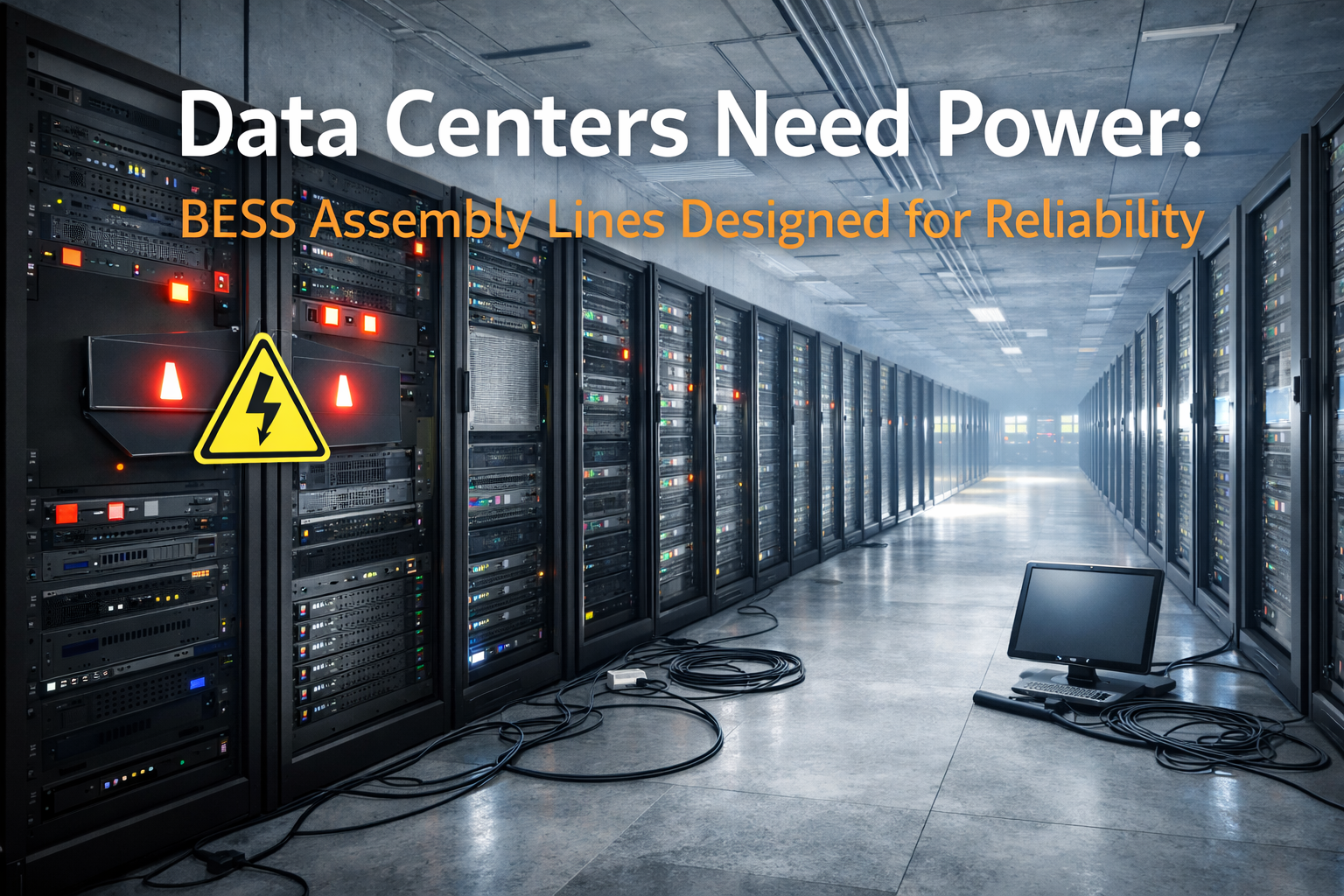
Explosive growth in hyperscale and edge data centers has put unprecedented pressure on reliable power infrastructure.
Global Outlook of Power for Data Center2025 → 2030 |
||||
| Data Center Electricity Consumption | ||||
|
448 TWh Consumption in 2025 |
600–800 TWh Projected by 2030 |
|||
| Estimated AI Server for Optimization | ||||
|
44% · 5× AI servers’ share of total power by 2030 · AI power rises fivefold |
||||
| Consumption Growth | ||||
|
||||
|
||||
Worldwide electricity consumption by data centers is projected to nearly double by 2030, driven heavily by AI optimization and compute-intensive processing, rising from about 448 terawatt-hours (TWh) in 2025 to 60-800 TWh by 2030. AI-optimized servers alone are expected to account for 44% of total data center power use by 2030, with their own power consumption rising nearly fivefold over the same period.
Traditionally, diesel generators and UPS (Uninterruptible Power Supply) systems were the frontline defenses for power continuity—but as data center power densities soar, these legacy approaches are taxed beyond practical limits. In particular, conventional UPS systems face growing challenges in scalability, efficiency, and lifecycle cost when supporting increasingly large data center loads.
Containerized battery energy storage systems (BESS) are therefore emerging as a solution that can complement and, in some scenarios, partially replace traditional UPS architectures. By integrating high-capacity battery systems with advanced power electronics, BESS can provide UPS-grade fast response while offering greater scalability for large facilities, as well as delivering instant power support together with cleaner, quieter operation than diesel generators. It increasingly becomes an important component in modern data center power resilience strategies.
This surge in demand from data centers has ripple effects upstream. Massive orders for energy storage infrastructure are reshaping manufacturing capacity and driving innovation in the design of battery energy storage system (BESS) assembly lines. Suppliers and integrators are investing in high-throughput production lines tailored to the performance and quality data centers demand.
What Data Centers Really Require from BESS?
| To meet data center power requirements, BESS solutions must do more than just store energy—they must deliver reliability, safety, and scale that align with complex IT loads and facility management frameworks. These core demands are redefining both product architecture and manufacturing quality systems on the factory floor. |
Fast Power Response with UPS Integration
Data centers rely on UPS-grade switchover for clean power during outages. A containerized BESS tailored for data centers must respond in milliseconds, bridging gaps between loss of grid power and generator support without flicker or interruption. That requires deeply integrated inverter and power conversion systems that are specifically engineered for instantaneous deliverability.
Thermal and Fire Safety for Asset Protection
High energy density behind thousands of processors demands elevated safety. Thermal runaway and fire risk are foremost concerns for operators, requiring redundant thermal management and advanced fire suppression engineered into every module. Manufacturing controls and safety testing traceability are now dovetailing with end-use certifications.
Scalability & Modularity
Data centers grow in phases, adding racks and capacity over time. Scalable, modular BESS units—often configured as ISO container systems—allow operators to expand stored capacity without forklift upgrades. This modularity must be baked into production lines so that assemblies can be tailored to site-specific energy, runtime, and cooling requirements without renegotiating manufacturing setups.
How Core Data Center Demands Are Transforming BESS Manufacturing?
| Meeting the complex expectations of data centers requires rethinking manufacturing on every level. Today’s energy storage systems fabrication isn’t just about slotting cells into racks—it’s about embedding quality, traceability, and cyber-secure controls into every step of the BESS assembly line. |
Automated Precision in Cell Stacking Improves System Reliability
In modern BESS assembly line environments—especially for the containerized battery energy storage systems preferred in data centers—prismatic cells are a dominant choice due to their safety, energy density, and robust thermal performance. Because data centers require an extremely stable and uninterrupted power supply, BESS deployed in these environments must maintain exceptionally high system-level consistency. This requirement places strict demands on the consistency of individual battery cells and modules.
Modern assembly lines, therefore, rely on automation for tasks such as precise placement, welding, and compression of each cell into modules. This eliminates most manual handling and dramatically reduces manufacturing variability.
As a result, automated precision leads to uniform performance and fewer early failures in the field, lowering operational risk. With detailed inline testing and consistent module quality, the BESS achieves the stability required to supply millisecond-level ride-through during power disturbances — a capability that effectively protects sensitive IT equipment and maintains service continuity without interruption.
End-to-End Traceability Enables Predictability and Risk Management
Advanced BESS assembly line environments now deploy manufacturing execution systems (MES) that record every critical parameter — from incoming cell lot, weld current profiles, and torque values to final calibration and test results. This granular traceability allows data center operators to assess quality before commissioning, plan preventive maintenance with data-backed confidence, and respond rapidly if field issues arise.
For mission-critical facilities that budget for uptime measured in “nines,” assured traceability minimizes uncertainty and contributes to predictable system performance over the asset’s lifecycle, improving long-term operations and lowering unplanned downtime risk.
Cybersecure Firmware and Provisioning Align Manufacturing with Data Center IT Policies
Unlike legacy energy storage production, modern BESS manufacturing incorporates cybersecure provisioning practices — such as signed firmware images, hardware-backed key injection, and audit logs tied to build records. This ensures that delivered systems are both physically reliable and scenario-secure, reducing the risk of firmware tampering or unauthorized access once commissioned.
For data center operators with rigorous IT and OT security policies, this alignment eliminates a class of risks that could otherwise compromise both power infrastructure and data systems. It also means that BESS can integrate into advanced energy management frameworks and grid services with consistent cybersecurity postures.
For producers targeting the high-growth data center BESS market, advancements in automated manufacturing, traceability systems, and quality management are not just operational improvements — they are strategic commercial enablers. These investments reduce risk, enhance competitiveness in bid processes, shorten delivery cycles, and justify higher margins through performance credibility and safety assurance.
Given the projection that data center storage requirements could expand substantially in the coming decade, these manufacturing practices position suppliers to capture a disproportionate share of future demand.
LEAD’s Prismatic Turnkey Solution and LEADACE MES for Intelligent BESS Assembly Lines
To serve the demanding quality, throughput, and traceability requirements of data center-grade battery systems, battery manufacturers must adopt integrated, intelligent production solutions. LEAD has established a comprehensive prismatic battery manufacturing turnkey solution complemented by its proprietary LEADACE MES— both engineered to elevate manufacturing performance, yield, and data integrity in BESS assembly line environments.
LEAD’s Turnkey Prismatic Manufacturing Solution
LEAD’s prismatic cell turnkey system spans the full production spectrum — from electrode preparation through cell assembly, formation & aging, and logistics — without requiring disparate equipment from multiple suppliers, which impedes integration and process consistency.
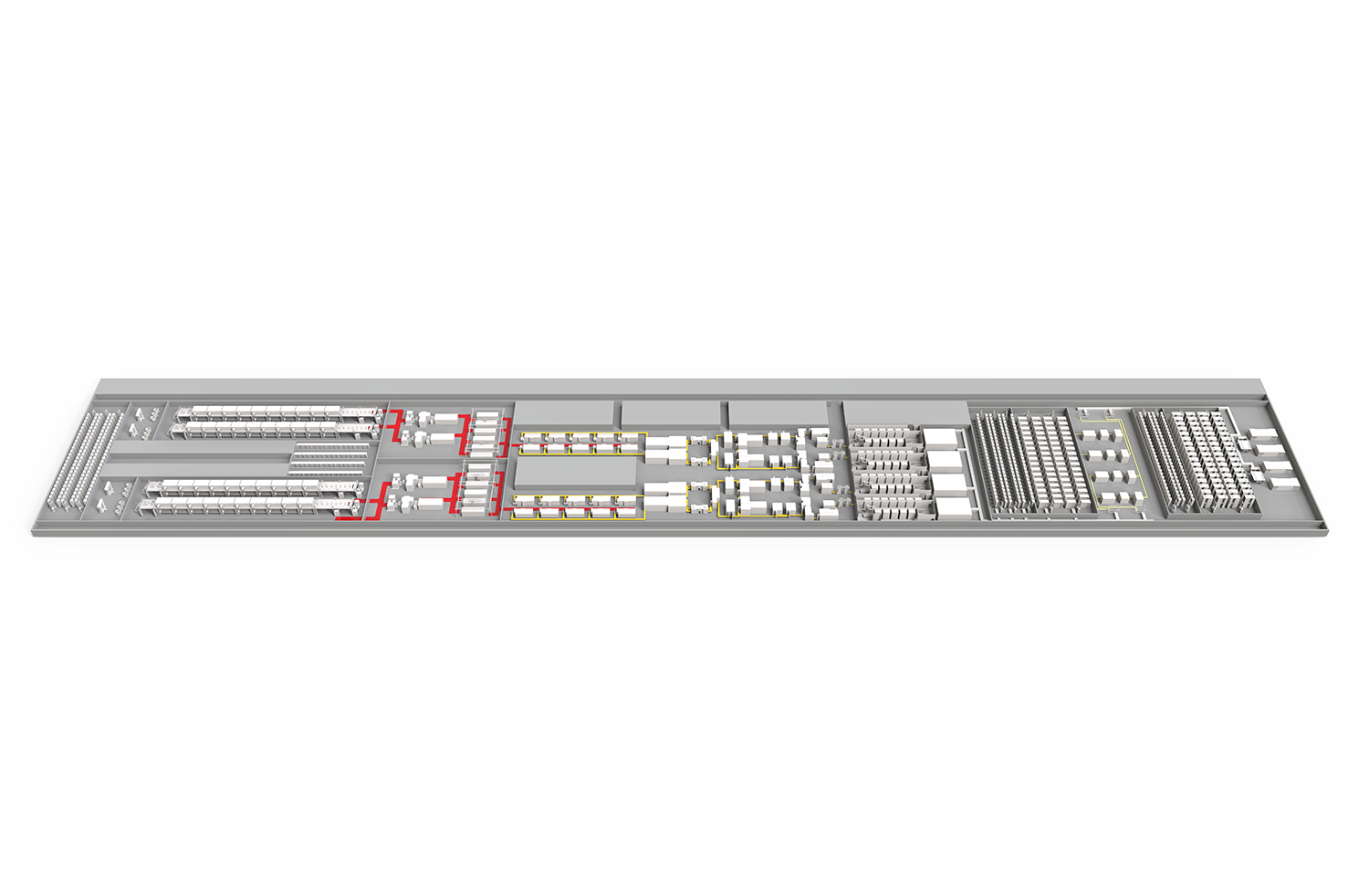
- High Throughput (15 PPM Designed, >12 PPM Stable): LEAD’s 280 AH prismatic production line is automatically engineered for a designed capacity of 15 pieces per minute (PPM) with a stable operating capacity consistently above 12 PPM. This throughput level represents a benchmark for large-format prismatic cells and supports giga-scale energy storage demands that data center customers increasingly require.
- Whole-Line Integration: The turnkey system unifies mixing, coating, stacking, cell making, assembly, formation & aging, film wrapping, sorting, and logistics under one engineering and deployment umbrella. This eliminates integration risk, shortens lead time, and maintains consistent manufacturing flow — all essential for stable output and predictable scheduling in BESS assembly line operations.
- High Availability and Yield: With whole-line availability above 75 % and first-time yield exceeding 92 %, LEAD’s solution delivers quality and uptime metrics that reduce rework, minimize downtime, and lower manufacturing variance — outcomes that align with the reliability expectations of data center power infrastructure.
- Modular, Standardized Design: The production line’s modular architecture standardizes hardware, layout, wiring, and control interfaces. This uniformity simplifies commissioning and maintenance, enhances interchangeability, and reduces operational costs, making lines easier to scale as data center BESS demand grows.
- Smart Inventory and Material Flow Control: Embedded logistics planning, smart inventory coordination, and seamless material flow across processes reduce bottlenecks and support stable operation even under variable production demands — an advantage as OEMs ramp up capacity for large data center contracts.
LEADACE MES: Digital Control for Battery Manufacturing Intelligence
Underpinning LEAD’s turnkey solution is LEADACE MES, a purpose-built manufacturing execution system that orchestrates production execution, quality control, and process data management across an entire BESS assembly line. MES systems like LEADACE provide the real-time visibility and control essential for:
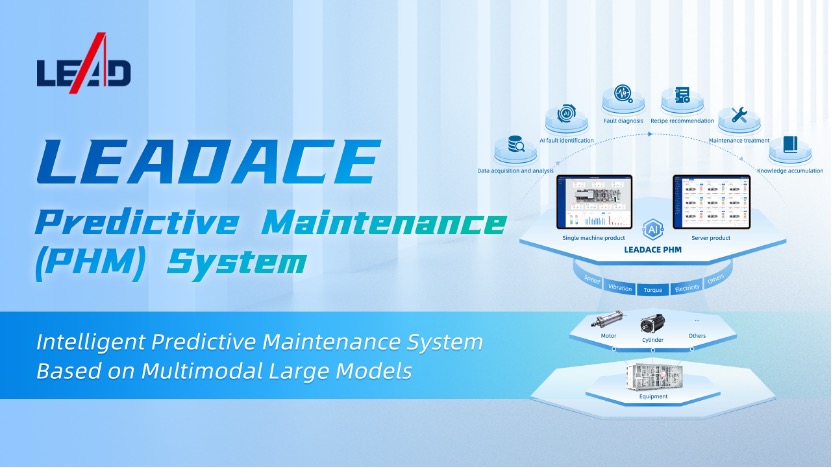
- Full traceability of production data, tracking material lots, machine parameters, inspection results, and final test outcomes from raw inputs to finished battery cells and modules.
- Cross-system data integration enables synchronization between planning, logistics, production execution, and quality management functions.
- Digital factory modeling, where operational models reflect actual production line status at workshop, line, and equipment levels.
- Millisecond-level response and operational stability, supporting high-speed manufacturing environments where tight process control is essential.
For battery manufacturers targeting the data center market, LEADACE MES serves multiple strategic purposes:
- It ensures inventory, process, and quality data are fully auditable, satisfying supply chain, compliance, and risk management criteria often required by mission-critical customers.
- It supports real-time exception handling and decision support, reducing defects and improving first-pass yield — vital for consistent performance in BESS assembly line production runs.
- It delivers manufacturing data security and authorization control, which are explicitly listed as capabilities in the LEADACE EAP data acquisition platform. It complements MES and supports full-link data management and permission control for edge collection systems.
Conclusion
Data centers no longer evaluate BESS suppliers solely on capacity or cost per kWh. They assess manufacturing precision, digital traceability, and cybersecurity compliance as part of operational risk control. Containerized ESS built with prismatic cells must meet strict standards for automated stacking accuracy, full-process genealogy, and IT-aligned provisioning governance.
Through the prismatic turnkey solutions and the LEADACE MES platform, LEAD provides the integrated manufacturing infrastructure required to meet these expectations. High-precision automation reduces structural deviation, while MES-first architecture ensures device-level traceability and auditable production records.
For battery manufacturers targeting data center projects, production capability is now a qualification threshold. With digitally governed execution and end-to-end process control, LEAD enables manufacturers to align operational excellence with the risk standards of modern data center environments.
You can contact us directly for more details on your manufacturing projects!