
As the photovoltaic industry accelerates its transition toward thinner wafers and higher-power modules, multi-subcell technology has become a key pathway for next-generation high-efficiency production.
By improving power generation efficiency, reducing silicon material consumption, and enhancing module resistance against microcracks and hot spots, multi-subcell enables higher-performance modules without changing existing module dimensions—making it a mainstream technology choice for manufacturers pursuing high-efficiency capacity expansion.
However, transforming this technology from concept into stable mass production remains challenging.
Laser slicing processes can introduce fragment risks, edge damage during cutting may accelerate cell degradation, and achieving both high-speed production and precision control in thin-wafer stringing remains difficult. These challenges continue to slow down manufacturers’ capacity expansion plans.
Breaking Through Every Bottleneck Across the Multi-Subcell Production Chain
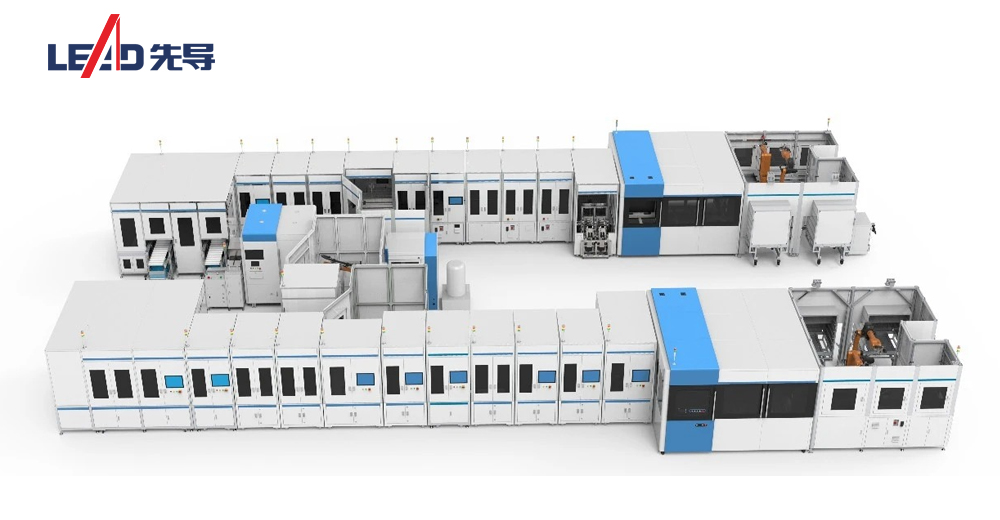
To address the challenges across scribe, passivation, sorting, and stringing processes, Lead Intelligent has developed a complete turnkey multi-slicing production line solution. By integrating all critical manufacturing steps into a unified equipment platform, the solution enables end-to-end process optimization and eliminates key bottlenecks in high-volume production.
Higher Throughput with Fewer Breakages and Lower Material Loss
The integrated solution combines laser scribe, automated material handling, edge passivation, and testing processes, creating a complete front-end manufacturing workflow designed for high-efficiency PV production.
-
High Throughput for GW-Scale Manufacturing
The scribe system achieves a single-machine capacity of ≥12,000 full-size wafers per hour, while the multi-subcell sorting system reaches ≥10,000 full-size wafers per hour, fully supporting the throughput requirements of gigawatt-scale photovoltaic manufacturing facilities.
-
Flexible Processing Architecture Minimizes Breakage Risks
Equipped with multiple vision inspection systems, combined with flexible alignment and handling mechanisms, the solution provides continuous protection throughout wafer processing. By reducing mechanical stress during transfer and positioning, it minimizes wafer breakage and improves production yield from the source.
-
Process Integration Reduces Edge Degradation
The integrated edge passivation module repairs cutting-induced damage, while interconnected equipment data enables rapid defect tracing and process optimization. This significantly shortens production line commissioning cycles and improves overall manufacturing stability.
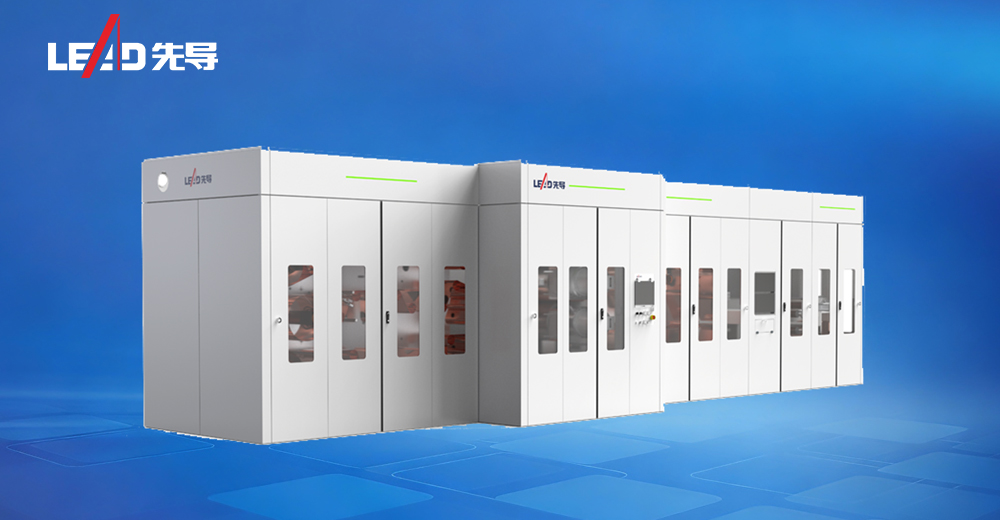
Multi-Subcell Stringer
As the core equipment within the integrated production line, the multi-subcell stringer is specifically designed to overcome the key challenges associated with high-volume multi-subcell solar cell production.
-
High Throughput
With a production capacity of up to 16,000 cells per hour, the system effectively addresses the industry challenge of significant throughput reduction after wafer slicing, enabling manufacturers to maintain high productivity in advanced PV production.
-
High Precision
Built on a granite base platform and equipped with high-precision linear motors, together with advanced vibration suppression technology, the system achieves highly accurate cell positioning and stable high-speed operation.
-
Superior Welding Quality
The system integrates a uniform-temperature welding zone with closed-loop temperature control to ensure consistent welding performance. Optional buffering and encapsulation processes enable seamless integration with downstream lamination processes, further improving production continuity.
Four Core Benefits Driving Long-Term Manufacturing Value
Leveraging the combined advantages of integrated production equipment and the PHM (Prognostics and Health Management) intelligent predictive maintenance platform, Lead Intelligent’s multi-subcell turnkey solution creates measurable value for customers across four key dimensions: production capacity, material utilization, equipment operation, and long-term scalability.
Maximizing Production Output and Reducing Equipment Cost per Watt
Through high-speed coordination across the entire production line, the system maintains an overall equipment availability rate of ≥98.5%. With higher output within the same factory footprint, the solution improves production efficiency compared with conventional industry approaches and effectively reduces equipment depreciation costs per watt.
Reducing Material Loss and Improving Silicon Utilization
Through comprehensive soft-contact protection mechanisms and multi-layer visual inspection systems designed to prevent wafer breakage, the solution significantly reduces cell scrap rates and minimizes raw material losses throughout production.
PHM Predictive Maintenance Enables Proactive Equipment Management
Powered by Lead Intelligent’s proprietary PHM intelligent maintenance platform, the solution transforms traditional maintenance models from reactive repair and scheduled servicing into proactive equipment health management. By enabling early fault detection and predictive intervention, the system helps reduce both manual inspection requirements and production downtime costs. The average annual maintenance cost of the stringer system is controlled below RMB 60,000, further improving operational efficiency through digitalized maintenance.
Multi-Technology Compatibility Supports Long-Term Product Evolution
The solution is compatible with thin-wafer manufacturing and various next-generation solar cell technologies, while supporting rapid switching between different multi-subcell formats to accommodate future product upgrades. Through a unified turnkey solution covering equipment, data systems, and after-sales services, Lead Intelligent helps customers avoid complex coordination among multiple suppliers while significantly reducing long-term operation and maintenance management challenges.
Multi-subcell technology has become a critical pathway for reducing the levelized cost of electricity (LCOE) in the photovoltaic industry. However, the complexity of full-process manufacturing integration has prevented many companies from successfully transitioning this technology into stable mass production. As a global provider of intelligent manufacturing solutions for the new energy industry, Lead Intelligent has developed a comprehensive multi-subcell turnkey solution covering scribe, automation, passivation, sorting, stringing, and intelligent maintenance.
By addressing critical manufacturing challenges across the entire value chain—including cutting yield, thin-wafer microcracks, insufficient production capacity, and high maintenance costs—the solution enables photovoltaic manufacturers worldwide to accelerate the deployment of high-efficiency multi-subcell production lines. With integrated capabilities in high throughput, low material loss, and intelligent equipment management, Lead Intelligent continues to support the PV industry’s transition toward higher-quality, lower-cost, and more sustainable manufacturing.