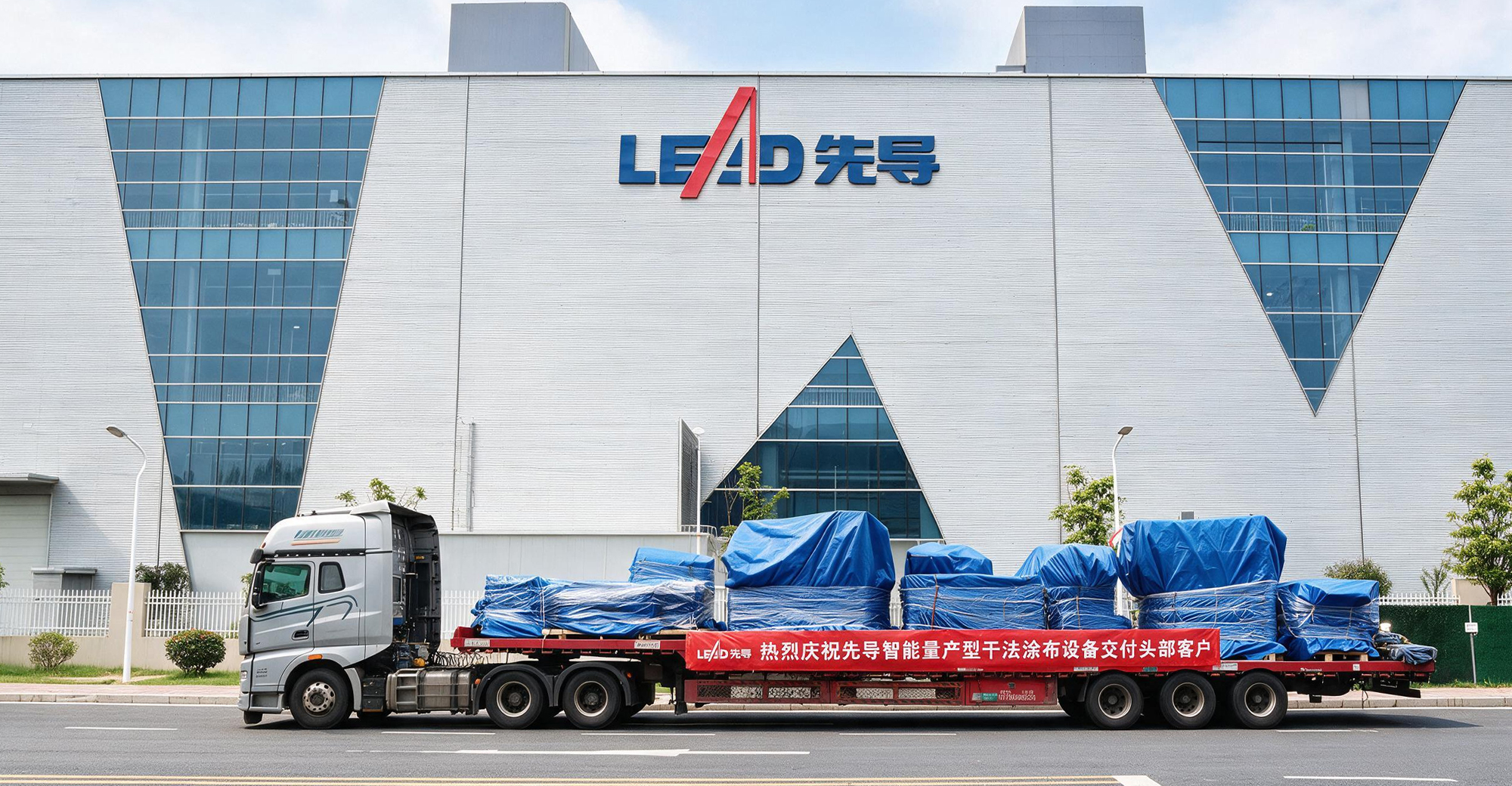

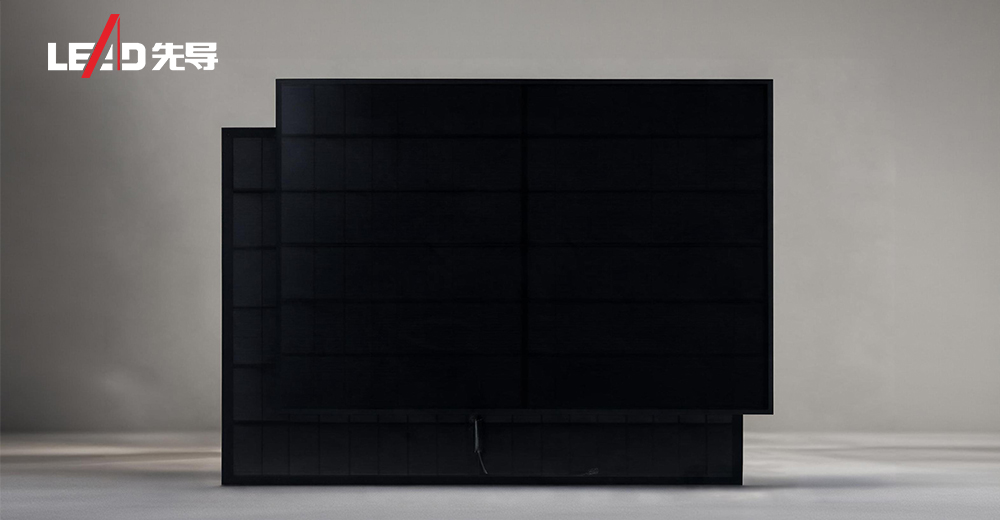
Lead Intelligent, a global provider of intelligent manufacturing solutions for the new energy industry, has achieved another delivery milestone with its proprietary BC full-screen stringer. The equipment has been delivered in volume to a leading global photovoltaic manufacturer, supporting the expansion of the customer’s BC full-screen module production capacity and providing the manufacturing foundation for the large-scale production of the next generation of high-efficiency BC modules.
Two Volume Deliveries in Two Months
Demonstrating Scale in Manufacturing and Delivery
The latest delivery marks LEAD’s second volume shipment of BC full-screen stringers in just two months. These successive deliveries to leading PV manufacturers demonstrate growing market recognition of the machine’s performance and reliability. They also highlight LEAD’s ability to execute large-scale deliveries at speed, enabling rapid response to capacity expansions and technology upgrades among leading PV manufacturers worldwide.
Backed by extensive technology development and a mature mass-production system, LEAD’s BC full-screen stringer has now achieved more than 10 GW in cumulative shipments. The equipment has undergone mass-production validation across multiple leading PV manufacturers, demonstrating stable performance and mature process capabilities. Its continued market adoption and repeat orders further underscore its competitiveness in high-volume BC module manufacturing.
Advanced Process Technologies for High-Volume BC Manufacturing
Designed specifically for back-contact (BC) cells without front-side busbars or grid lines, LEAD’s BC full-screen stringer is a high-precision interconnection system integrating six core functions: automatic loading, rear-side alignment, rear-side interconnection, low-stress soldering, string inspection and orderly unloading. The system is designed around the defining requirements of BC full-screen modules—zero front-side shading, improved aesthetics, higher power output and lower energy losses—with five key technology advantages.
Maximized Active Area
Precision placement of busbars and ribbons, combined with concealed interconnection design, maximizes the module’s active area and improves its visual appearance. The design also helps reduce the risk of microcracks during lamination while supporting higher power output and long-term module reliability.
Higher Power Density
Virtual-coordinate positioning, center gripping and intelligent vision-based alignment enable precise negative-gap cell placement. This increases module power density and helps unlock the full power-generation potential of BC cells.
Ready for Thinner Cells
An industry-first low-temperature lamination soldering process helps address cell warpage and breakage caused by thermal stress. The equipment maintains a cell breakage rate below 0.1%, making it well suited to the continued trend toward thinner BC cells.
Lower Consumable Costs, Higher Reliability
The equipment is fully compatible with mainstream XBC and 0BB architectures, helping reduce the consumption of key materials such as silver paste and solder paste. Its mature low-temperature alloy soldering process further improves soldering stability and process compatibility, providing a proven equipment platform for the high-volume manufacturing of XBC + 0BB modules.
Flexible Multi-Process Compatibility
The system supports flexible switching between adhesive-assisted lamination with alloy interconnection and high-temperature soldering, allowing manufacturers to accommodate different product development requirements and production scenarios while increasing overall line flexibility.
The equipment delivers broad cell-format and interconnection compatibility, supporting cell sizes from 182 mm × 182 mm to 230 mm × 230 mm and configurations ranging from 5BB to 50BB. Its proprietary welding process keeps the cell breakage rate below 0.1%, while the adhesive dispensing defect rate remains below 0.03% contributing to consistently high production yields. At the same time, a single machine can achieve throughput of up to 10,800 pcs/h for 72-cell module formats, combining three key production requirements: high yield, broad compatibility and high throughput. These capabilities make the system well suited to the high-volume manufacturing requirements of BC full-screen modules.
The photovoltaic industry is entering a new phase of higher-quality growth, with competition increasingly shifting from price toward technology and manufacturing value. BC full-screen modules, with their zero front-side grid shading, high conversion efficiency, strong low-light performance and clean appearance, are well suited for BIPV, residential rooftop and commercial and industrial (C&I) PV applications.
As a pioneer in intelligent PV manufacturing solutions, LEAD has developed an equipment portfolio covering major technology routes including BC, TOPCon, HJT and perovskite. Looking ahead, LEAD will continue to advance high-efficiency PV manufacturing equipment, address the process challenges of next-generation cell and module technologies, and help customers worldwide scale production with greater efficiency, quality and reliability.