
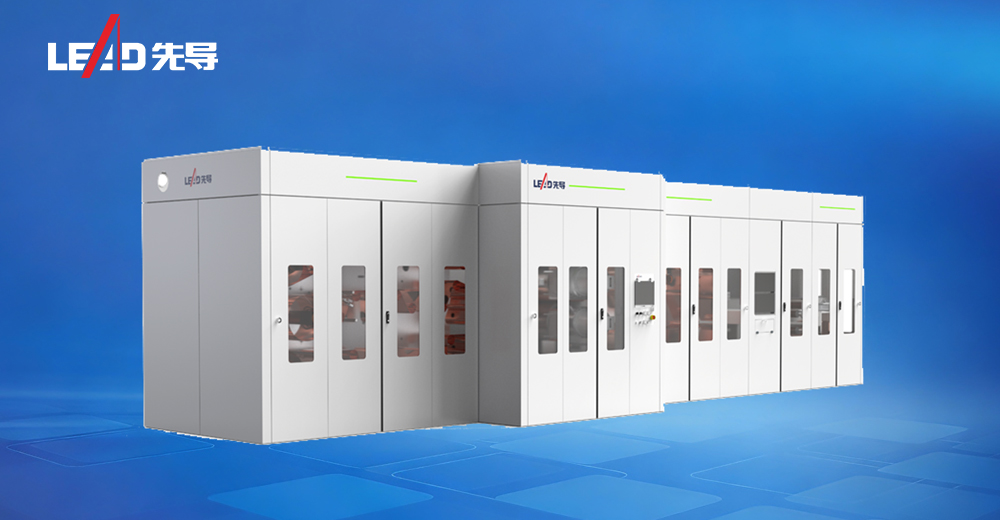
Lamination decaling technology can achieve high-precision and high-yield integration lamination of ultra-thin fragile solid electrolyte membrane with electrode, while also possessing extremely strong process independence and adaptability. Lead Intelligent’s mass production-level solid electrolyte lamination decaling machine has a maximum mechanical running speed of 100m/min, capable of achieving high-speed, continuous/intermittent, stable roll-to-roll automated production, with intermittent lamination alignment accuracy of ±0.3mm, core roller vibration accuracy of ±1μm, and can stably construct a sealed micro-environment with ultra-low dew point below -60℃, precisely breaking through the three major industry pain points of solid-state battery decaling process mass production performance, precise control, and environmental adaptation.
Currently, the solid-state battery industry is accelerating towards commercialization, among which, the three core difficulties of electrode preparation, electrolyte membrane preparation, and internal solid-solid interface contact are the key bottlenecks hindering industry-scale mass production.
The structure of solid-state batteries requires the electrolyte to be tightly combined with the electrode in an ultra-thin film form, constructing a continuous ion conduction pathway. However, after the formation of the solid-state electrolyte membrane, it is brittle and prone to damage, and mainstream sulfide materials have strong chemical activity, easily oxidizing, making them difficult to adapt to traditional coating processes.
In this context, lamination decaling technology, with its process advantages of achieving high-precision and high-yield integration lamination of ultra-thin fragile electrolyte membranes and electrodes, is gradually becoming the core path for the industry to break through the bottleneck of electrolyte membrane preparation, rising as a key mass production process for solid electrolyte membrane preparation and lithium-based electrode forming.
Industry common difficulties
Lamination decaling mass production ‘impossible triangle’
Compared to the coating route, the lamination decaling solution has extremely strong process independence and adaptability advantages, capable of independently optimizing the surface morphology and densification degree of the electrolyte membrane, ensuring the quality of the membrane layer from the source, while also achieving precise bonding of ultra-thin lithium foil with the current collector, directly preparing high-energy-density metal lithium anode. At the same time, leveraging its highly flexible process characteristics, decaling technology can accommodate the integration of multi-layer materials and complete precise lithium addition on the electrode, efficiently achieving pre-lithiation of the anode, significantly improving the energy density of the cell and improving cycle-life degradation performance.
Therefore, the manufacturing precision and stability of the lamination decaling process directly determine the mass production yield of ultra-thin electrolyte membranes, the consistency of electrode lamination, and the electrochemical performance of the lithium anode, serving as the core key to unlocking the large-scale mass production of solid-state batteries.
However, in real industrial scenarios, the industry has long faced the ‘impossible triangle’ dilemma of mass production: it is difficult to simultaneously achieve high interface lamination quality, high production efficiency, and high material compatibility, often encountering contradictions such as ‘improving quality without increasing production’ and ‘difficulty in maintaining quality when increasing production’. This has led to numerous manufacturing pain points such as easy damage to ultra-thin electrolyte membranes, poor consistency in electrode lamination, and low batch production yield, greatly limiting the leap of solid-state batteries toward large-scale mass production.
Full-dimensional technological breakthroughs
Reconstructing solid-state decaling mass production capability
Targeting the structural difficulties of the industry, Lead Intelligent relies on its years of research and development experience in precision lithium battery equipment, deeply explores core processes of solid-state batteries, and builds a mass production-level solid electrolyte lamination decaling machine, focusing on two core scenarios: solvent-free multi-layer lamination and precise anode pre-lithiation, achieving precise integration forming of electrolyte membranes, lithium foils, and electrodes, fundamentally solving the industry’s pain points of poor solid-solid interface bonding, weak batch stability, and insufficient process adaptability, breaking through the ‘impossible triangle’ of decaling mass production.
Mass production performance is comprehensively upgraded,
fully compatible with GWh-level capacity implementation
The equipment has excellent process compatibility and mass production adaptability, supporting dry/wet dual methods for incoming material production, processing width coverage from 100–1050mm full size range, with a maximum mechanical running speed of up to 100m/min, capable of achieving high-speed, continuous/intermittent, stable roll-to-roll automated production. It perfectly adapts to the large-width, high-cycle, large-scale manufacturing needs of power battery, completely solving the contradiction of ‘high quality but low production’ and ‘high production but low quality’ in traditional processes, providing solid production capacity support for the implementation of GWh-level solid-state battery production lines.
Self-developed precision control system,
overcoming yield management difficulties
Based on Lead Intelligent’s self-developed high-precision tension closed-loop control system and multi-level vision correction technology, the equipment can stably control the intermittent lamination alignment accuracy to ±0.3mm, strictly control the core roller vibration accuracy to ±1μm. Combined with the dedicated roller preheating system, the equipment ensures uniform thickness and tight bonding of the entire electrode sheet during transfer. At the same time, the equipment innovatively adopts gradient peeling technology + static friction damping function design, ensuring the complete and undamaged peeling of ultra-thin electrolyte membranes under the premise of thoroughly solving common defects such as film tearing, corner residue, and uneven bonding, significantly improving the yield and batch consistency of solid-state electrode sheets, meeting the quality requirements of automotive-grade cells.
Strict micro-environment control,
suitable for mainstream sulfide technology routes
Targeting the characteristics of sulfide solid-state materials with high activity, high sensitivity, and easy oxidation failure, the equipment can stably construct a sealed micro-environment with an ultra-low dew point below -60℃, while integrating comprehensive protection designs including corrosion prevention, explosion prevention, and dust prevention. The entire process avoids material side reactions and process contamination caused by water vapor and oxygen, ensuring the safety of material quality and production line safety under the premise of high-speed and efficient mass production, highly adapting to the current mainstream sulfide solid-state battery process system in industrialization.
By leveraging the three core advantages of mass production performance, precise control, and environmental adaptability, Lead Intelligent’s mass production lamination decaling machine accurately breaks through the industry pain points of solid-state battery decaling processes, perfectly solving the mass production difficulties of quality, efficiency, and compatibility that are difficult to balance. Currently, this equipment has been validated and put into actual production by multiple leading car manufacturers and solid-state battery companies/laboratories at home and abroad, providing a mature and reliable industrialized solution for the high-precision composite of ultra-thin electrolytes and pre-lithiation of lithium negative electrodes.
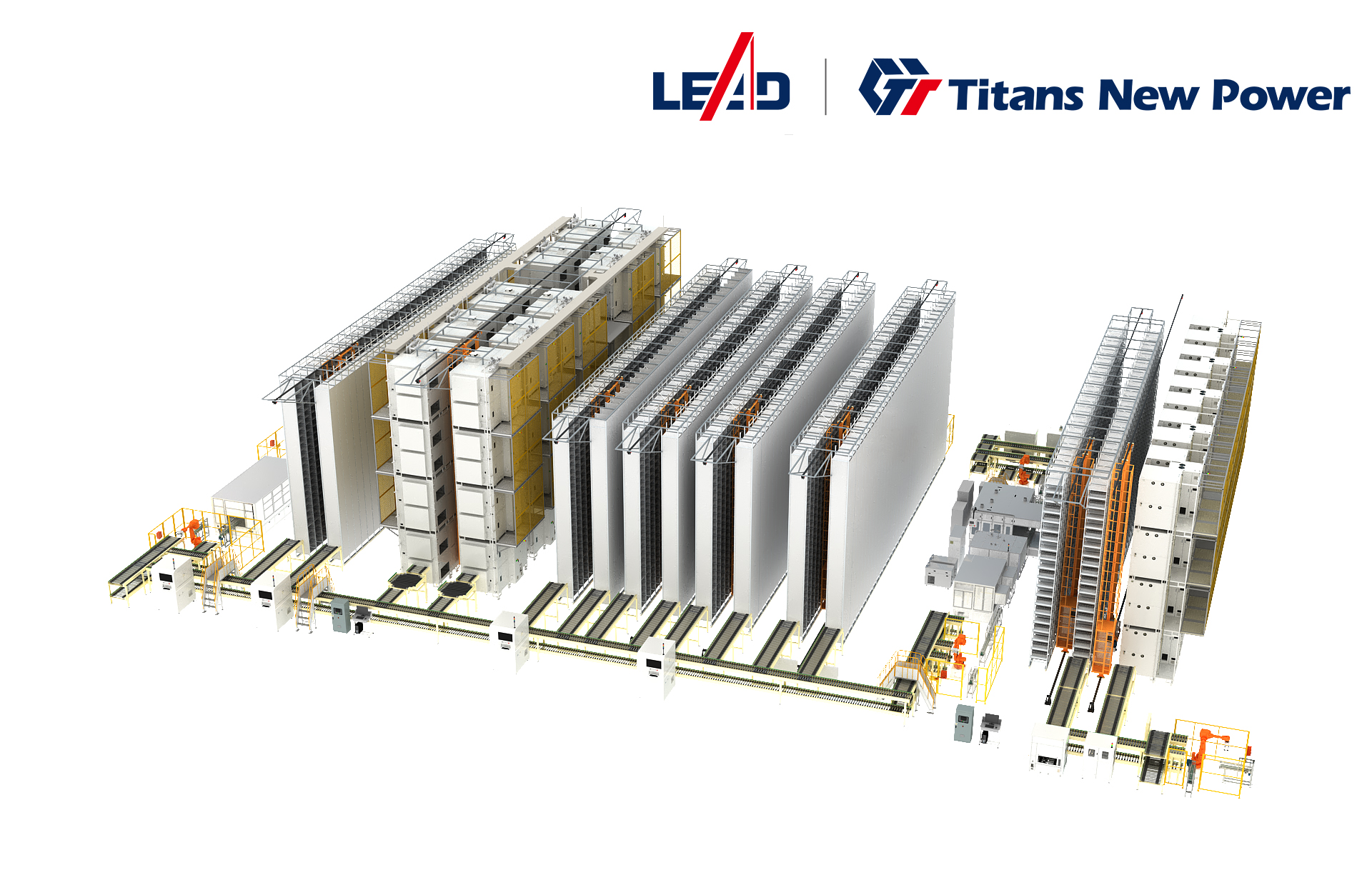
At the same time, Lead Intelligent also relies on the hard-core technological breakthroughs of a single piece of equipment, stepping out of the single equipment manufacturing logic, and proactively completes the construction of the full solid-state battery line solution, connecting all the process equipment links required for full solid-state battery mass production, systematically solving the industry’s difficulty of laboratory processes being difficult to industrialize. In the future, Lead Intelligent will continue to focus on innovation in solid-state battery mass production equipment, driving the high-quality development of the new energy industry with hard-core Chinese intelligent manufacturing.