
In 2025, as global demand for power batteries surpasses 1,300 GWh and the energy storage market enters a phase of explosive growth, competition in the lithium–ion battery industry has moved beyond a race for scale to a deeper contest of “extreme manufacturing.”
In an interview with 21st Century Business Herald, Wang Yanqing, Chairman of Lead Intelligent Equipment (hereafter referred to as LEAD), said the true inflection point for the industry is shifting from capacity expansion toward the integration of supply chain resilience and intelligent manufacturing. He also outlined the company’s strategic thinking on securing leadership in next-generation technologies through forward-looking R&D.
The following is an excerpt from the interview.
A critical threshold—from quantitative growth to qualitative transformation—has arrived. The lithium–ion battery industry’s “TWh era” (measured in terawatt-hours, signaling a new level of capacity and demand) is no longer a distant beacon but a rising tide already beneath our feet.
In 2025, global demand for power batteries exceeded 1,300 GWh, while the energy storage market entered a period of rapid expansion.
In reality, the industry is not merely stepping into the TWh era today. Leading battery manufacturers have already mapped out capacity plans that push toward the terawatt-hour scale.
“Competition in the TWh era is not about a single company—it is about the resilience of the entire industrial chain,” Wang said. LEAD’s role, he added, is to become the best equipment partner for customers advancing into the TWh era—and ultimately a strategic partner for the industry as a whole.
An engineer-entrepreneur who has spent more than two decades in equipment manufacturing, Wang’s tone sharpens when discussing industry shifts and quickens when the topic turns to technological innovation.
A native of Wuxi, he has seen both his personal wealth and the company’s market value surge—at one point placing the firm among China’s “hundred-billion-yuan club.” Yet when he speaks about corporate responsibility, his message remains firm: companies must look beyond domestic competition and toward global markets.
In his view, growth cannot rely solely on the domestic arena. Expanding globally allows companies to move beyond price competition in a saturated market and seek new engines of growth abroad. The ambition is reflected in the words displayed on the wall of LEAD’s headquarters: to become a world-leading intelligent equipment company.
Breaking the “Impossible Triangle” in Manufacturing
What is the most significant change in the lithium–ion battery industry’s TWh era? It is not merely larger capacity figures, but a fundamental shift in the logic of competition.
Over the past decade, battery manufacturers competed primarily on scale. The faster a company could build factories and deploy production lines, the greater its advantage.
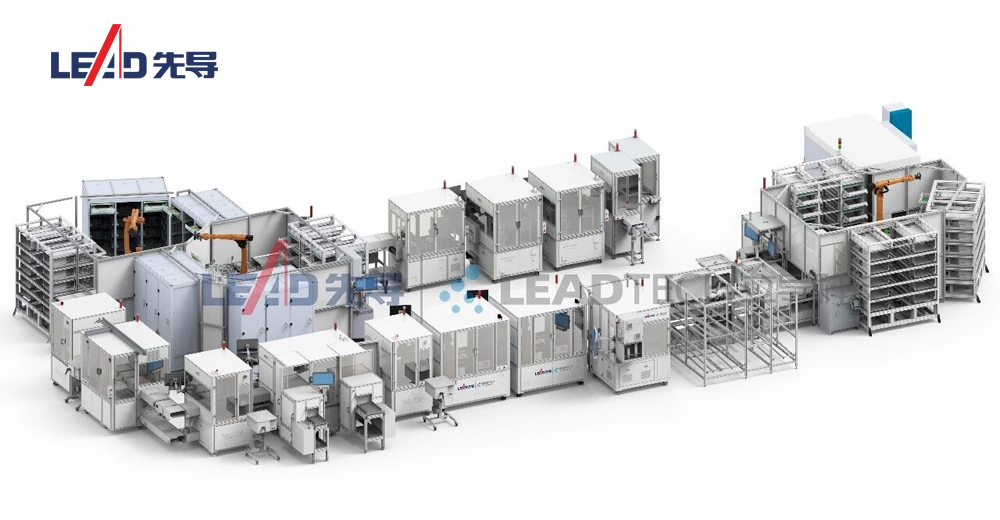
During that period, LEAD broke through the technological barriers set by Japanese and Korean equipment makers through innovations in winding machine technology. It later expanded to cover the entire production process, offering turnkey line solutions spanning every stage—from slurry preparation to module and PACK assembly.
This capability established the company’s first competitive moat: full-value-chain “turnkey line delivery.”
“In the non-standard automation sector, turnkey engineering significantly strengthens customer stickiness. It’s a threshold that single-equipment suppliers find difficult to cross,” Wang recalled.
Today, the TWh era is presenting battery manufacturers with a new set of challenges—simultaneously in scale, efficiency and quality. Companies must achieve major leaps in capacity under constraints of limited space and labor, a requirement that goes beyond simply replicating production lines.
“What we deliver today,” Wang said, “is no longer just advanced production lines, but complete ‘TWh super factories’—facilities that can begin operations immediately, ramp up smoothly and continuously create value.”
Behind this lies LEAD’s effort to resolve manufacturing’s so-called “impossible triangle” of scale, efficiency and quality. Wang’s answer is extreme manufacturing—a fundamental shift from expanding physical space to harnessing data intelligence. “Whoever completes this transformation first will gain the initiative in the TWh era,” he said.
He breaks the transformation into three pillars:
- Data-driven manufacturing – breaking down data silos across the factory to form an integrated data pool that is visible, analyzable and controllable, providing the foundation for sound decision-making.
- AI empowerment – identifying defects invisible to the human eye and calculating optimal processes beyond the limits of human experience.
- Flexible automation – enabling production lines to “think” and adapt, allowing multi-product manufacturing on shared lines and changeovers in seconds.
Efficiency gains, for instance, are increasingly driven by digital twin technology.
“Before the physical factory even begins construction, we build an identical ‘virtual factory’ for the customer,” Wang explained. Equipment installation, line integration and process optimization can all be completed in this virtual environment in advance.
The result is tangible: equipment delivery efficiency can increase by up to 50%, allowing customers to bring factories online months earlier.
Once the physical plant is operational, the virtual factory becomes its “AI brain,” continuously synchronizing and analyzing real-time data to optimize production performance—ultimately raising overall equipment effectiveness (OEE) by as much as 35%.
From “Turnkey Delivery” to “Defining the Next Generation”
Deep collaboration with leading customers forms LEAD’s second competitive barrier.
Wang revealed that LEAD has established joint R&D mechanisms with the world’s top battery manufacturers. From the very first blueprint of a gigafactory, the company works alongside customers to define processes and co-develop innovations. This level of integration enables LEAD’s equipment to align precisely with evolving market demands.
Scale and supply chain advantages constitute the third barrier.
“Leveraging our large delivery volumes, we hold strong bargaining power across the supply chain, as well as advantages in in-house development of key components and cost control,” Wang said. This allows LEAD not only to navigate intense market competition but also to reinvest cost efficiencies into further technological development.
Wang summarized the company’s ability to sustain its leadership in three areas: the scalability of its platform-based strategy, a high-intensity and continuous R&D system, and localized global service capabilities.
He described the company’s R&D approach as a form of “saturation attack.”
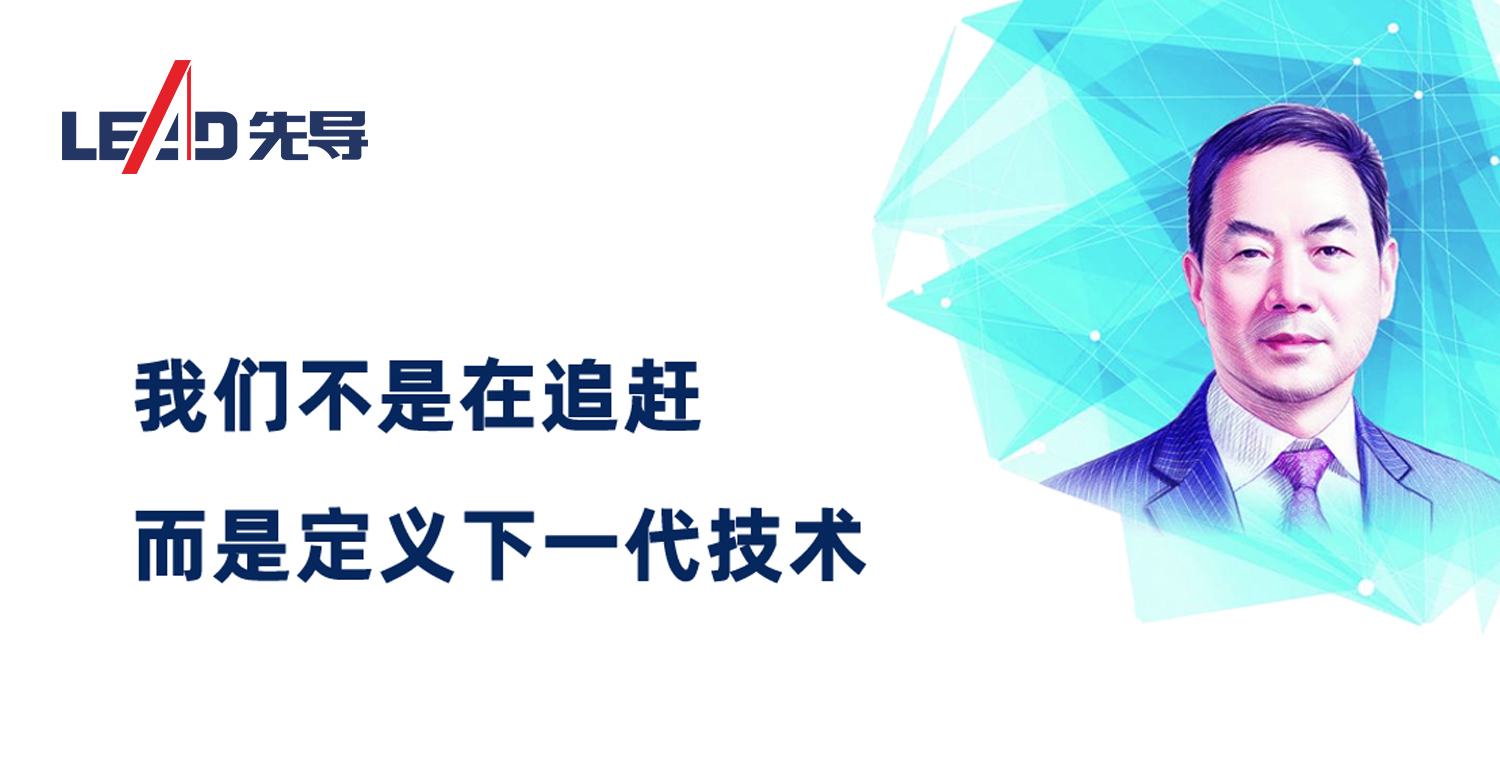
“We are not chasing technology—we are defining the next generation of it,” Wang said. “Whether in solid-state battery equipment or composite current collector equipment, we position ourselves early to secure the technological high ground.”
Taking solid-state batteries as an example, Wang noted that the key manufacturing processes and equipment required for all-solid-state batteries differ significantly from those used for conventional liquid-electrolyte batteries—areas that had previously not been explored within the lithium–ion battery industry.
From an equipment perspective, several factors will determine the successful industrialization of solid-state batteries: resolving manufacturing challenges associated with solid–solid interface contact, improving equipment efficiency; advancing the maturity and localization of dedicated manufacturing equipment; enabling GWh-scale mass production with high yield rates; achieving high levels of process integration and automation; and ultimately ensuring cost control under large-scale production.
“To address this, we are building on our experience in high-precision manufacturing from the lithium–ion battery sector while actively introducing cross-industry technologies and assembling multidisciplinary teams,” Wang told 21st Century Business Herald. “This allows us to further upgrade both precision and processes to fully meet the industrialization requirements of solid-state batteries.”
Securing a Foothold in the High-End Market
One unavoidable reality is that the new energy sector is currently facing structural overcapacity, with price wars at times becoming the industry norm.
Wang has called on industry peers to abandon unproductive internal competition—a view that has sparked widespread discussion within the sector. “What we mean by rejecting ineffective ‘involution’ is not avoiding competition,” he said. “It is rejecting destructive low-price competition and instead competing on value.”
How, then, can companies maintain market share without engaging in price wars?
Wang outlined three approaches.
First, replace single-price competition with TCO (Total Cost of Ownership).
Customers increasingly focus not only on equipment purchase prices but also on yield rates, utilization, and energy consumption across the production line.“LEAD’s equipment may carry a slightly higher upfront price,” Wang said, “but technological innovation allows customers to achieve substantial cost reductions and efficiency gains in production. The savings generated during manufacturing far exceed the price difference in equipment procurement. That is the essence of value-based competition.”
Second, differentiate to escape homogenized competition.
Rather than competing in low-end capacity in crowded markets, LEAD focuses on securing high-end orders with higher technical barriers.
According to Wang, sectors such as solid-state batteries, large cylindrical cells, and high-capacity energy storage batteries require advanced technology and therefore do not lend themselves to low-level price competition.
“By positioning ourselves early in these fields, we avoid price wars while securing a strategic foothold in future markets,” he said.
Third, expand through globalization to unlock incremental growth.
Overseas markets tend to place greater emphasis on technological reliability and delivery capability, rather than simply the lowest price.
“Our overseas expansion has already begun to show results,” Wang said. “A broad international network allows us to secure higher-quality orders, helping us move beyond domestic price competition and find new growth opportunities in global markets.”
According to the company’s financial report, LEAD generated RMB 1.154 billion (approximately USD 168.5 million) in overseas revenue in the first half of 2025, continuing its year-on-year growth. Gross margins also improved to 40.27 percent, higher than the company’s overall margin level.
Meanwhile, LEAD is actively leading and participating in the development of both national and international industry standards, promoting the standardization and modularization of equipment manufacturing. The effort aims to phase out outdated low-end capacity and foster a healthier market environment.
Wang also called for stronger respect for intellectual property as companies expand globally.
“Only by protecting innovation can the industry shift from competing on price to competing on technology,” he said. “We will firmly defend intellectual property rights, combat imitation, and guide the industry back to healthy, technology-driven competition.”
He added that LEAD advocates working alongside upstream and downstream partners—as well as industry peers—to explore new sectors such as energy storage and hydrogen energy. Through technological spillovers, the company hopes to help upgrade the broader industrial chain.
“The goal,” Wang said, “is for everyone to benefit from technological innovation—rather than fighting one another in an already saturated market.”