
AI data centres are expanding at an unprecedented pace. Yet the infrastructure underpinning this computing revolution extends well beyond chips and servers. Above all, it requires a reliable, continuous and readily available supply of electricity.
BlackRock estimates that US data centres will require approximately 148 GW of additional power capacity by 2030. Meanwhile, expanding conventional power grids and building large-scale power generation facilities can take years. Access to electricity is therefore emerging as a major constraint on data centre development.
Against this backdrop, solid oxide fuel cells (SOFCs) are attracting growing attention for their high efficiency, low emissions, fuel flexibility and potential for rapid deployment. Their modular architecture offers a more flexible approach to power supply in applications where conventional energy infrastructure may take years to build. According to industry estimates, modular SOFC systems can be delivered in as little as 90 days for 50 MW installations and 120 days for 100 MW installations.
As demand for SOFCs gathers momentum, the next challenge for the industry is becoming increasingly clear: how can the technology move beyond the ability to manufacture individual units towards stable, repeatable production at scale?
Manufacturing Starts with the Right Equipment: Lead Hydrogen Intelligent’s SOFC Strategy
The industrialisation of SOFCs is no longer simply a competition in electrochemical technology. It is increasingly a test of capabilities across materials, manufacturing processes and production equipment.
Lead Intelligent has identified SOFC/SOEC as a strategic priority within its advanced new energy equipment portfolio, committing resources to the development of related technologies and manufacturing capabilities.
As a wholly owned subsidiary of Lead Intelligent, Lead Hydrogen Intelligent began developing its SOFC-related equipment and process capabilities in 2019. Drawing on the parent company’s established R&D infrastructure, precision engineering expertise and quality management experience in advanced new energy equipment, it has progressively built capabilities across key manufacturing stages, including precision film formation, cell fabrication, precision cutting, isostatic pressing, laser processing, stack assembly and testing.
The company now offers equipment covering a range of core manufacturing processes and holds more than 20 authorised patents related to SOFC technologies.
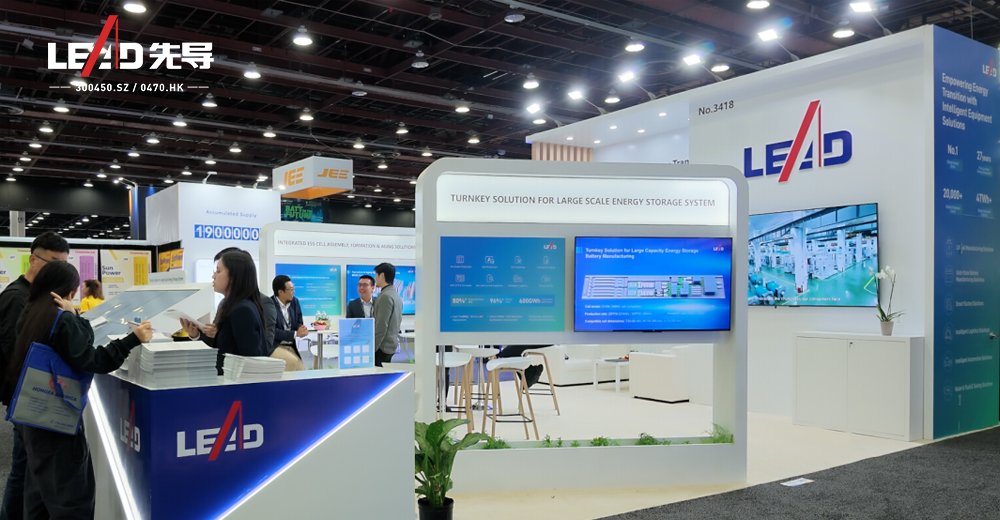
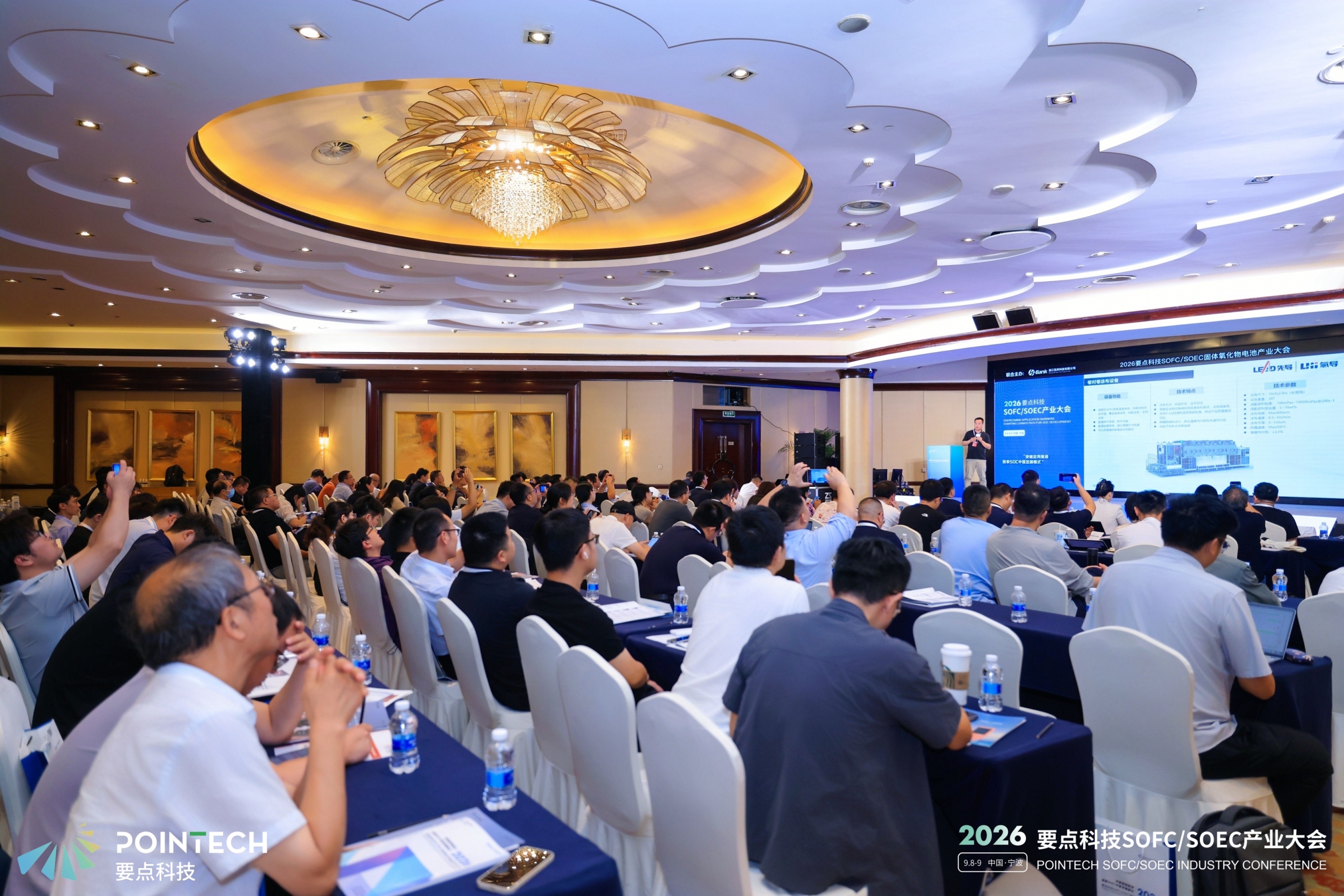
At a recent industry conference, Lead Hydrogen Intelligent delivered a dedicated presentation on SOFC manufacturing equipment and processes. The discussion covered both anode-supported and metal-supported technology pathways, examining how equipment requirements differ across manufacturing approaches. Using the anode-supported route as an example, the presentation demonstrated how core equipment can support the manufacturing process from material preparation through cell fabrication to performance validation.
Consistent Slurry, Consistent Manufacturing
For anode-supported SOFCs, slurry quality provides the foundation for subsequent film formation. As production scales up, fluctuations in slurry dispersion, viscosity and stability can affect film thickness, density and pore structure, ultimately compromising product consistency.
Lead Hydrogen Intelligent addresses this challenge at the slurry preparation stage. Its equipment supports slurry viscosities ranging from 100 to 10,000 mPa·s, with batch capacities of 1–20 L, providing a stable material foundation for downstream processing.
In tape casting, the challenge goes beyond simply depositing material onto a substrate. It is about consistently producing functional layers with uniform thickness and stable properties.
Lead Hydrogen Intelligent’s multifunctional tape casting equipment accommodates different film-forming methods, including slot-die extrusion and comma coating. It also supports continuous, intermittent and multi-lane production modes.
Key specifications include:
- Casting width: Up to 400 mm
- Operating speed: 0.5–3 m/min
- Dry film thickness: 5–120 μm
- Thickness uniformity: ≤±3%
One equipment configuration can also be flexibly adapted to different application scenarios, enhancing process compatibility and equipment versatility.
Beyond Precision: Achieving Consistency Across the Entire Manufacturing Process
SOFC manufacturing is not a matter of achieving precision at any single production stage. Consistency in the finished product depends on every step, from material film formation and cell fabrication to stack assembly and performance testing.
At the stacking assembly stage, Lead Hydrogen Intelligent’s equipment combines flexible vacuum adsorption, centre positioning, automated loading and closed-loop process control. It achieves a stacking cycle time of approximately 4 seconds per piece, with an alignment accuracy of ±0.2 mm.
These capabilities help move multilayer assembly beyond simply bringing components together towards achieving consistent, repeatable stacking quality.
For metal-supported SOFCs, Lead Hydrogen Intelligent is also developing equipment for key processes, including tape casting, stacking, system assembly and testing.
AI-powered vision inspection further enables automated identification of surface defects and other critical imperfections in cells, improving both the automation and data-driven capabilities of quality inspection.
Testing plays a dual role in SOFC manufacturing. It is essential for evaluating cell and stack performance, while also providing a critical link between R&D validation and manufacturing process development.
Lead Hydrogen Intelligent’s SOFC testing equipment covers single-cell testing as well as higher-power applications. Its single-cell test stations support operating temperatures from 0 to 800°C, with temperature control accuracy of ±1°C. The company’s portfolio also extends to test equipment rated from 1 kW to 60 kW, providing data support for performance evaluation, process validation and durability testing.
From materials and individual cells to equipment and testing, manufacturing equipment is becoming a critical link between technological development and industrial-scale production.
As the expansion of AI computing continues to drive global electricity demand, the window for SOFC commercialisation is opening. For equipment manufacturers, however, the opportunity lies in more than supplying individual machines. It lies in applying a deep understanding of materials and manufacturing processes to translate technologies developed in the laboratory into production capabilities that are stable, flexible and repeatable at scale.
Understanding the process. Engineering the equipment. Advancing manufacturing.Lead Hydrogen Intelligent is continuing to build the engineering capabilities required for SOFC industrialisation, with core process equipment at the heart of its approach.