
Foldable smartphones have once again become a major focus in the consumer electronics market. As product designs and manufacturing processes continue to evolve, consumers are placing higher demands on display flatness, folding feel, and long-term reliability. Maintaining a smooth display surface through repeated folding and unfolding has become a key challenge in the ongoing development of foldable devices.
Improving display performance depends not only on the display panel itself, but also on the hinge structure beneath the screen and the micro-support processes. To address the manufacturing challenges posed by complex structures, Lead Intelligent has brought chip-level 3D inkjet printing technology into foldable display hinge manufacturing. Through micron-level precision control and fine material deposition, the technology offers a new process solution for optimizing support structures in the folding area.
Micro-Scale Forming: A New Approach to Foldable Display Manufacturing
Foldable display hinges feature complex structures, where the thickness, uniformity, and force distribution of the support layer can all affect folding performance. Achieving high-precision, uniform material deposition on irregular surfaces remains a key challenge in the related manufacturing processes.
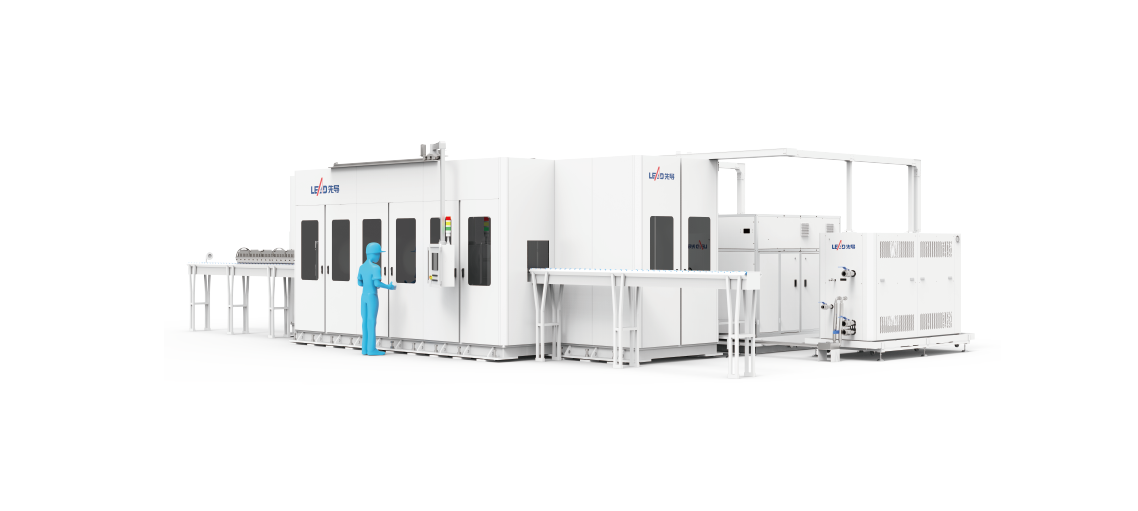
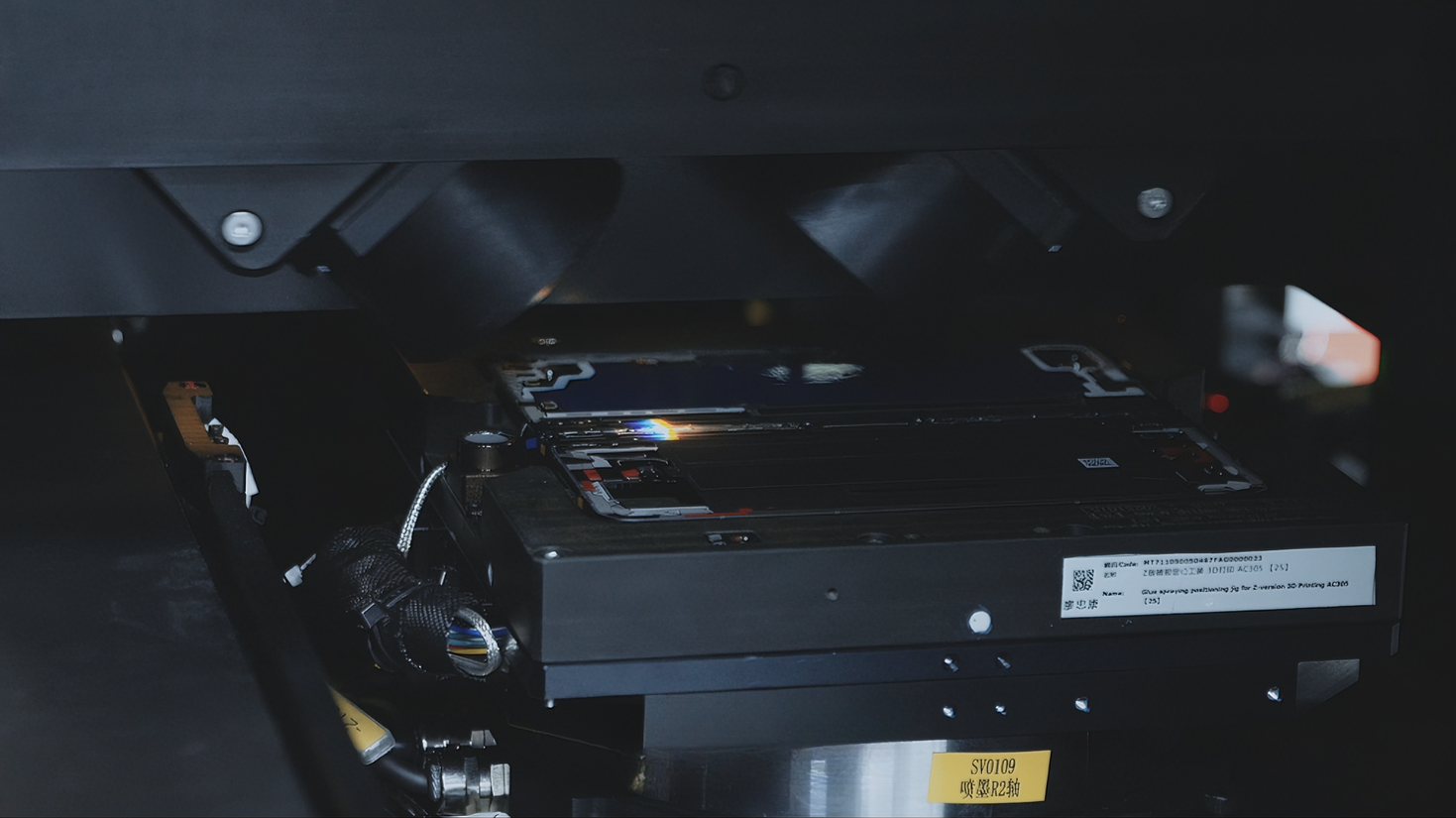
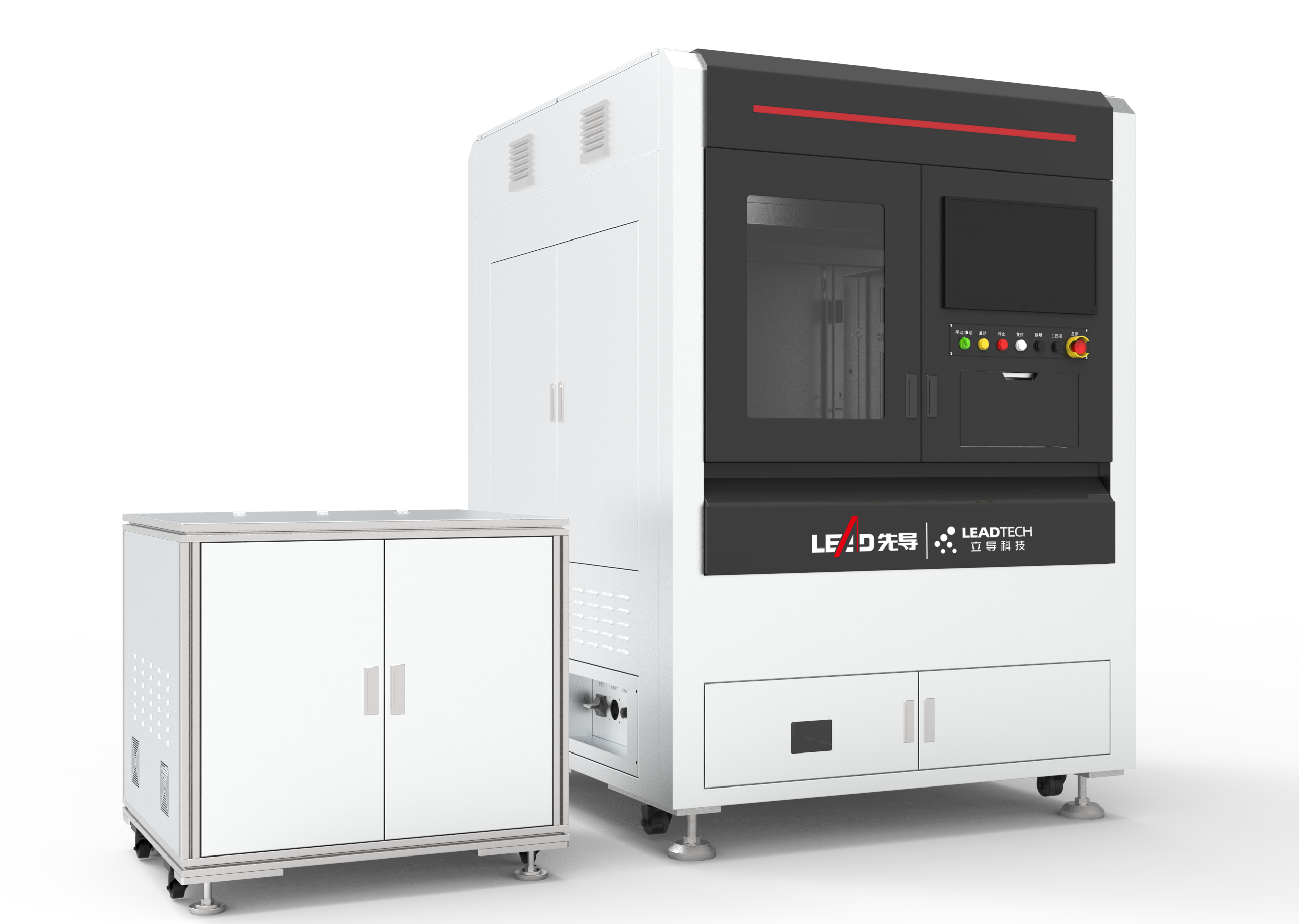
Lead Intelligent’s chip-level 3D inkjet printing system integrates high-precision 3D profiling with micro–droplet jetting technology. By accurately depositing polymer materials according to the surface topography of each workpiece, the system enables fine-feature fabrication on complex structures. Compared with conventional manufacturing approaches, this digital manufacturing method offers greater flexibility in controlling material deposition, supporting structural optimization for precision components.
Lead Intelligent has established an in-depth technical partnership with OPPO and successfully applied this digital printing technology to a key manufacturing process for the hinge of OPPO’s latest-generation foldable smartphone. The application has significantly improved the consistency of hinge support during folding, helping the finished product achieve advances in crease control and folding reliability.
From Precision to Productivity: Expanding the Boundaries of Precision Manufacturing
Precision printing requires more than accurate positioning. It also demands a careful balance between micro–droplet control, printing speed, and process stability. Lead Intelligent’s chip-level 3D inkjet printing machine delivers precise control across several critical stages of the process.
Micron-Level Positioning for Precise Control
The machine uses high-precision 3D profiling to identify workpiece topography and guide printing alignment. Motion accuracy reaches ±3 μm, with printing accuracy of ≤10 μm, enabling precise material deposition on complex surfaces.
Picoliter-Scale Inkjet Printing for Fine-Feature Fabrication
With a minimum droplet volume of 5 pL, the system builds up structures through precisely controlled micro–droplets, enabling localized material deposition and fine-feature fabrication. This supports the stringent the control requirements for material distribution in precision manufacturing.
High-Speed Printing with Intelligent Process Control
The machine achieves printing speeds of up to 1,000 mm/s and integrates automated optical inspection (AOI), real-time process monitoring, and closed-loop temperature control. Together, these capabilities help maintain process stability and production consistency, bringing high-precision printing closer to actual manufacturing applications.
As a leading provider of equipment solutions for consumer electronics manufacturing, Lead Intelligent’s 3D inkjet printing technology is breaking through the boundaries of single-process manufacturing, with its combined advantages of high flexibility, non-contact processing, micron-level forming, and low material consumption. Its precision manufacturing solutions are already serving leading domestic and international consumer electronics brands. The company is also steadily expanding these technologies into more demanding micro- and nanoscale manufacturing applications, including advanced semiconductor packaging and photovoltaic manufacturing.
As manufacturing requirements continue to evolve, Lead Intelligent will continue to advance its precision equipment and advanced manufacturing processes, focusing on customers’ practical challenges in product development and production. By delivering increasingly precise and efficient solutions, Lead Intelligent aims to bring the value of advanced manufacturing technologies to a wider range of applications.